An interview preserves a voice and reveals clues absent from indexes. Prepare a few themes rather than a list of dates.
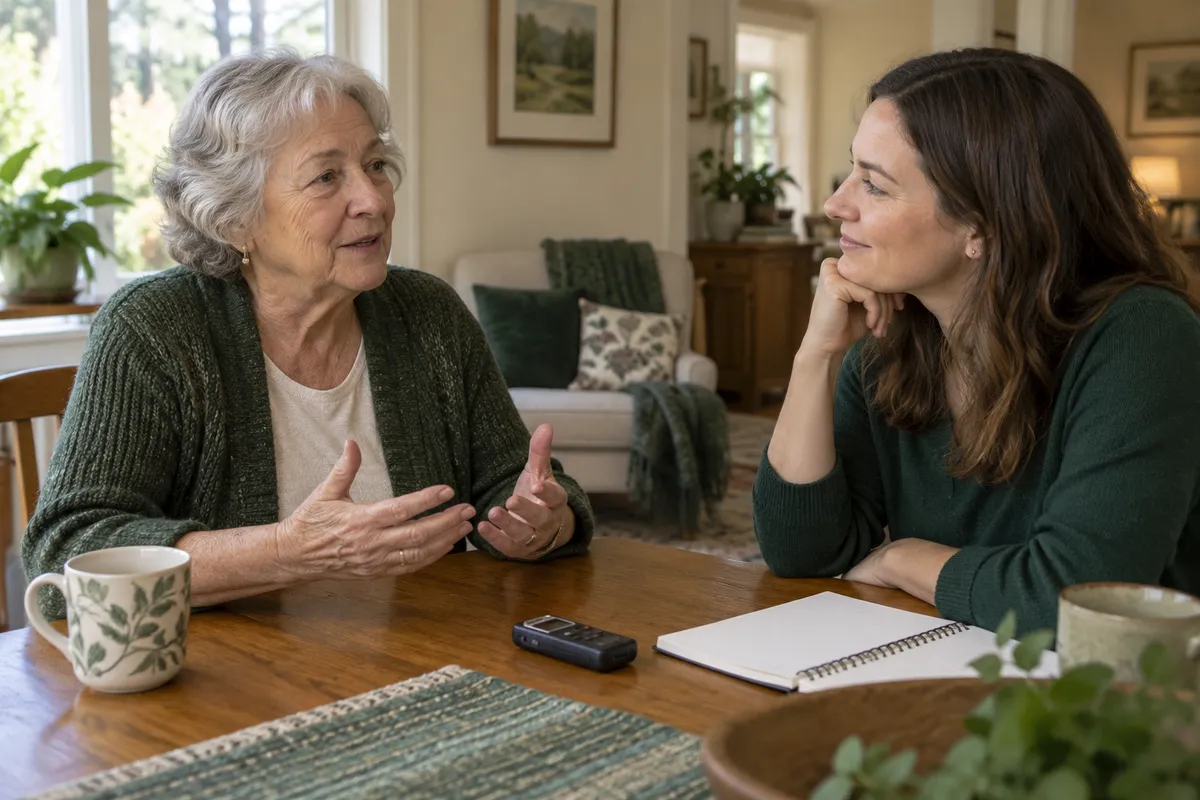
Conversation between two fictional people, with a notebook and recorder. Illustration; fictional scene, not documentary evidence.
The method, step by step
Ask permission before recording and explain how the recording will be used. Begin with homes, occupations, celebrations and people in a photograph.
Ask open questions about everyday life. Then establish whether the person witnessed the event or heard about it from someone else. Do not immediately correct a contradiction.
Afterwards, record the interview date, the witness and sharing restrictions. Transcribe useful passages, preserve the original recording and turn each clue into a possible search.
Compare dates and relationships with documents. Keep the original account separate from your later interpretation.
What to record
Prepare open questions: where did you live, who lived with you, what record could confirm that memory? Record the interview date and permission to record or share. Keep the witness’s words separate from your interpretation.
Tick items as you read. Ticks remain only on this page and disappear when it is reloaded.
An overview of roles in turning memories into a book, after gathering testimony and its sources.
Édition Livre France
Source note
An interview also preserves where a memory came from
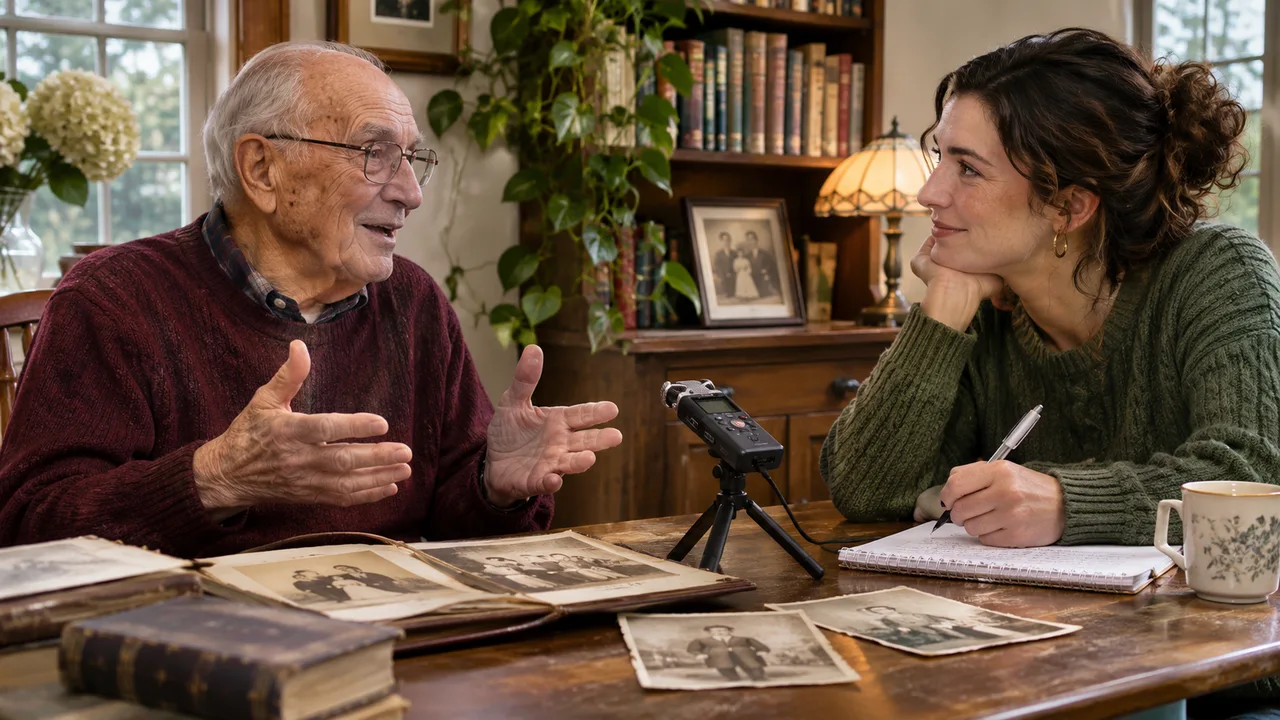
Prepare open questions about places, occupations and relationships; a photograph or address can start the conversation. Ask one question at a time, allow silences and respect declined topics. Ask permission before recording and explain the intended use.
Record who speaks, when and how they know the story: experience, a relative’s account or reading. Afterwards date files, summarise names and places to check and mark uncertain words. Confirm sharing terms before publication, especially for living people; a precise memory remains testimony to compare with records.
Try the reasoning
A precise memory is supplied by one person. How should you record it?
Reasoning: Record who speaks, when and where the memory came from. Preserve uncertainty and treat it as testimony until checked against records.
Dates below apply to each resource, not an exhaustive check of its collections. Read the limits and official pages before requesting records or visiting.