A photograph preserves a scene, not necessarily a certain identity. Notes on the back, the studio and visible objects are clues to document.
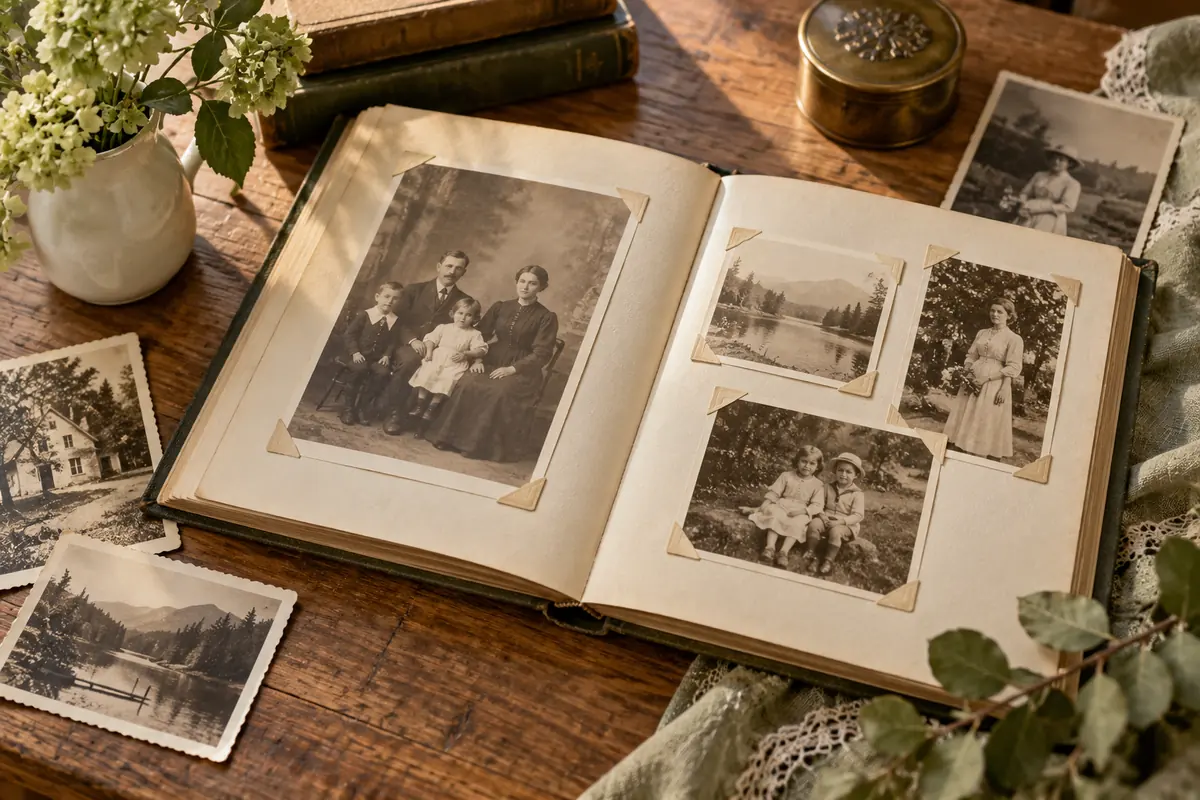
Photograph album with portraits of fictional people. Illustration; fictional scene, not documentary evidence.
The method, step by step
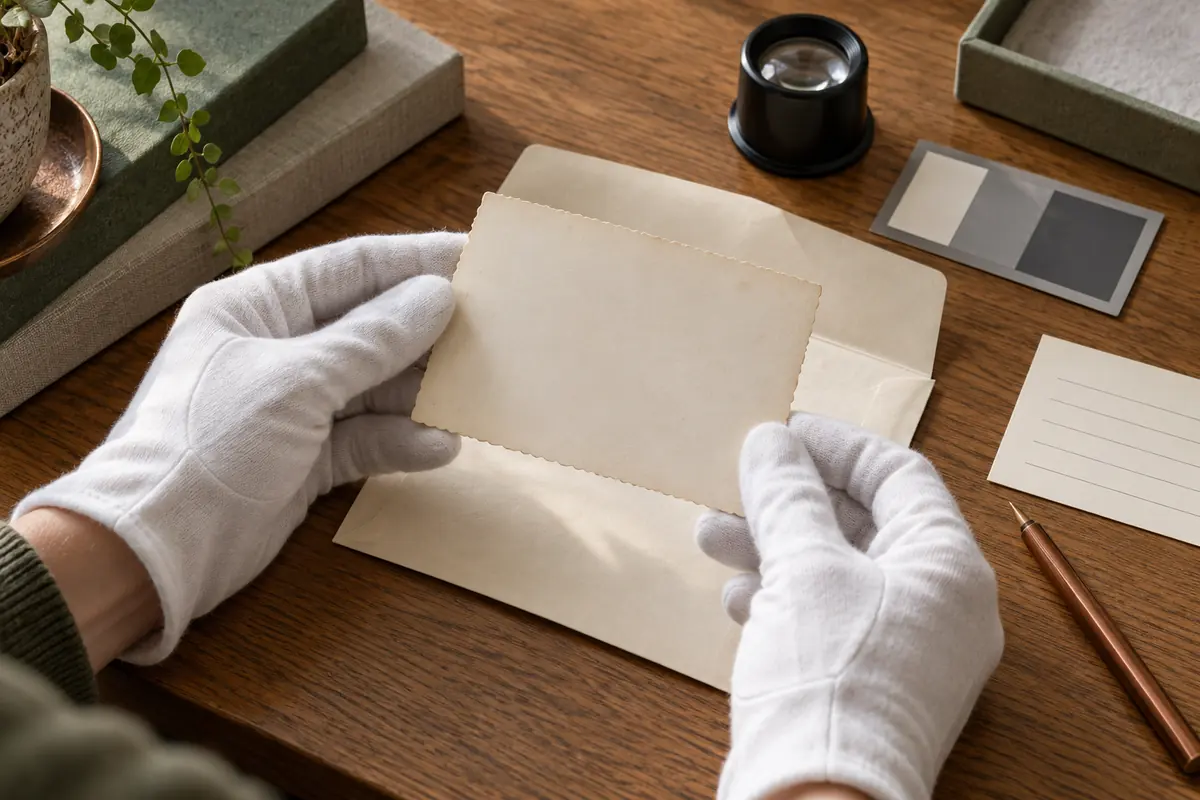
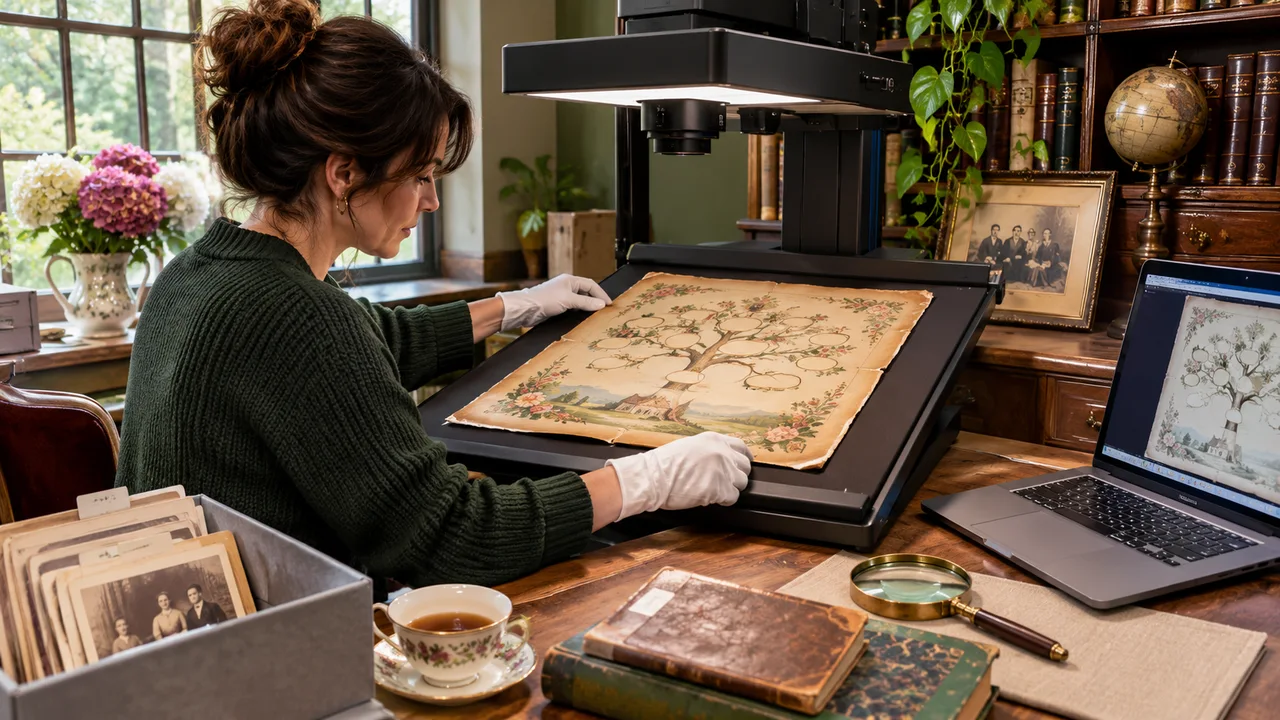
Scan front and back. Keep a master file and a smaller sharing copy; do not crop your only digital original.
Assign a stable identifier and record owner, provenance and dimensions. Transcribe inscriptions, distinguishing contemporary notes from recent additions.
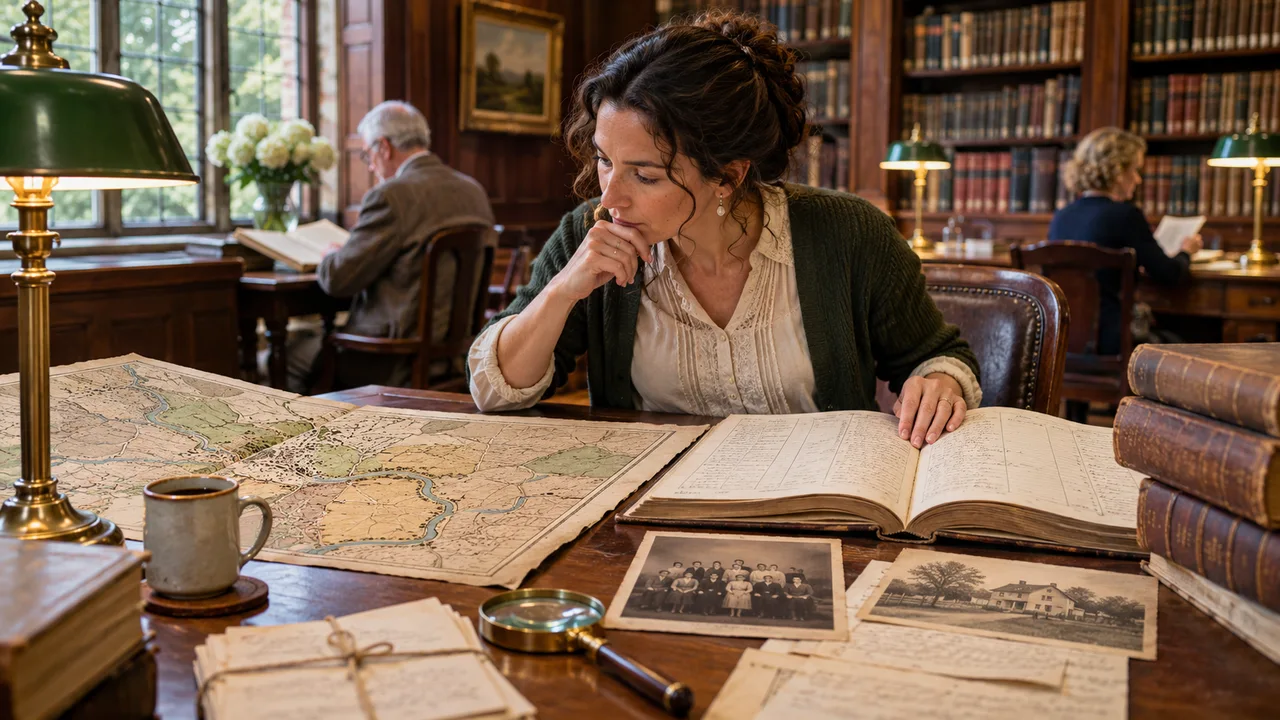
Ask several relatives for identification without suggesting a name. Compare answers with timelines and places.
Label identities as certain, probable or unknown. Mark restoration and colourisation as transformations and retain them separately from the scan.
What to record
Give the scan and physical object an identifier. Record front, back, dimensions, inscriptions, owner and scanning date. A caption should name who proposed an identification and why; retain “unidentified person” when evidence is insufficient.
Albums: choose reversible mounting
What the collection contains
NARA recommends non-adhesive corners or sleeves using acid-free paper or stable plastics such as polyester, polypropylene and polyethylene. It advises against PVC and self-adhesive albums.
Details to record
Photograph page order and backs before changing storage. Record captions, neighbouring images and original envelope references.
Next check
Choose a support that holds the photograph without strain. If it is already glued or fragile, do not force removal: preserve its context and ask a conservator.
Dates below apply to each resource, not an exhaustive check of its collections. Read the limits and official pages before requesting records or visiting.