The connections that span generations

Using these tools

A citation lets readers locate the record and check your reading. Distinguish record, repository and reproduction consulted.

Record in your research log

  1. Archive repository
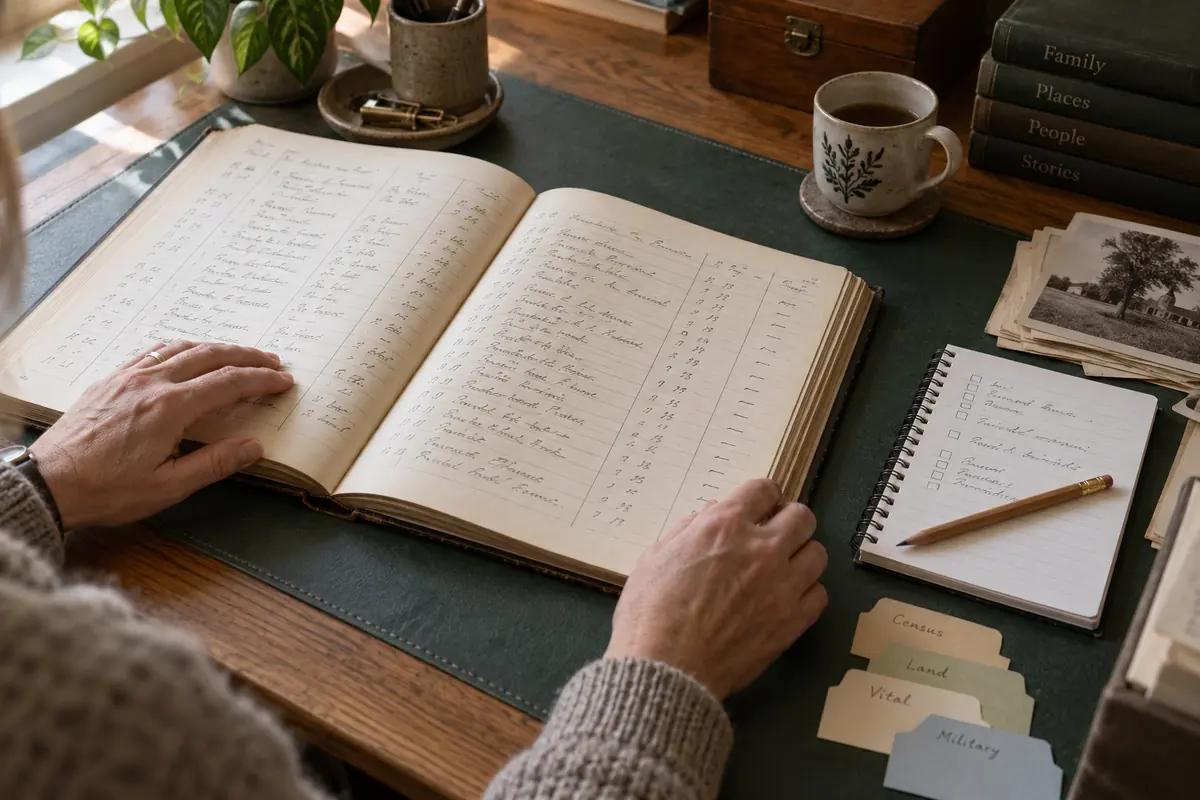
  2. Reading a register with a verification notebook.
    Reference, volume, page or image
  3. Record date and type
  4. Person or subject
  5. Record URL
  6. Accessed

Cite sources so evidence can be found again →

Fictional citation example

Municipal archives of [place], civil registration, marriages, [year], reference [reference], entry [number], [spouses’ names], image [number]; reproduction consulted on [portal name], [persistent URL], on [access date].

Replace the bracketed fields with what you actually consulted. If you only read an index or transcription, say so rather than citing the original as if you had seen it. A repository reference and entry number remain useful if the viewer URL changes.

National Archives · Building a source citation ↗

Choose your next source

Start with your research question. Compare what each record can contribute before expanding your search.

Reading records
Starting pointRecord or action to prioritiseWhat still needs checking
An index entryOpen the full image, headings and adjacent pages.An index may omit witnesses, notes or corrections.
A person in a householdCompare address, stated relationships and household composition.Sharing a home does not establish biological parentage.
A date in a recordDistinguish event, registration, writing and copying dates.Keep the original wording before normalising.

Method pointers: surviving collections and recorded information vary by place and period.

Continue your research

Distinguish people with the same name

Worked example

Fictional scenario: two Mary Martins live in one municipality. One marriage names a father and occupation; the other lead has only an approximate year. Keep separate identities until records establish a connection.