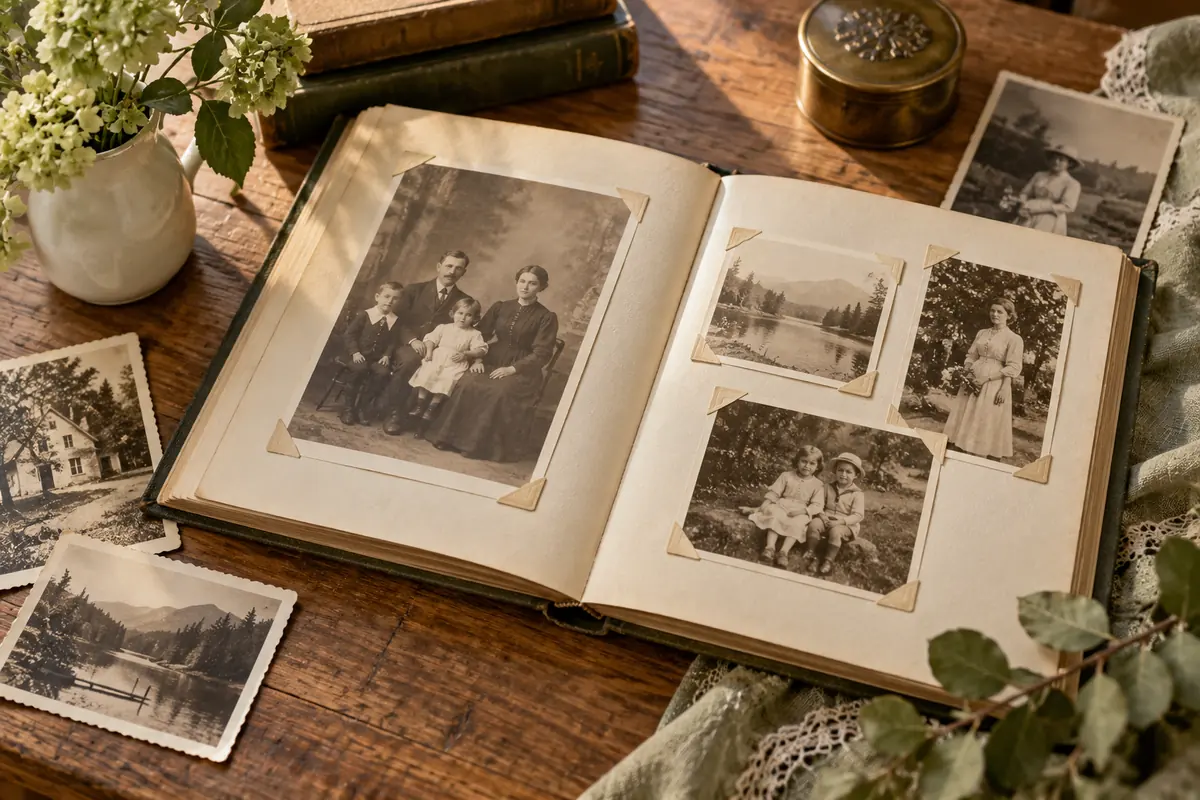
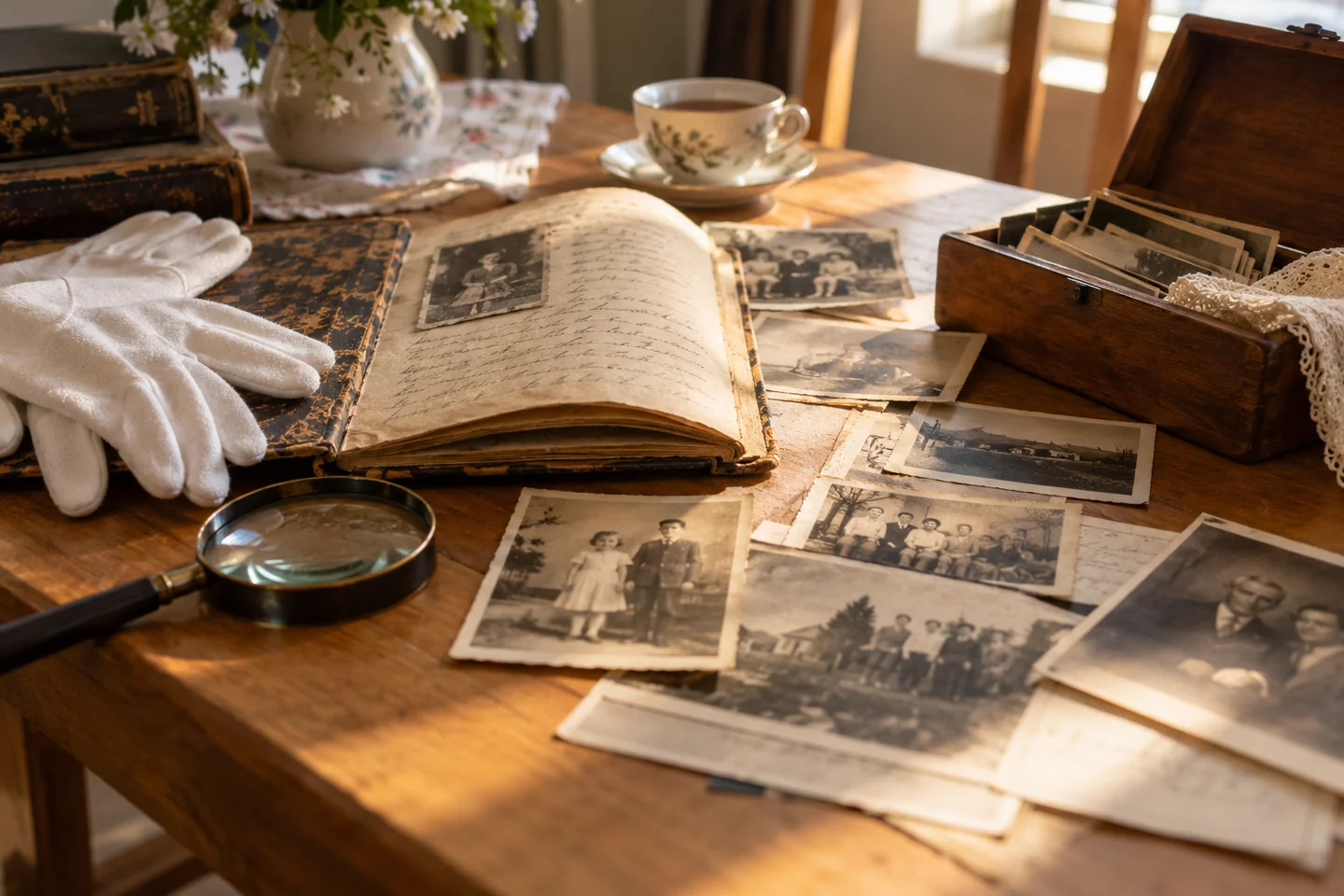
An album preserves order, captions and associations as well as images. Document the whole before removing a print or rearranging pages.
Photograph album with portraits of fictional people. Illustration; fictional scene, not documentary evidence.
The method, step by step
Assign identifiers to the album and pages. Photograph covers, full pages and writing; record provenance, holder and when the information was received.
Transcribe captions exactly and distinguish old writing from recent identification. When someone recognises a face, record their name, words and reasons.
Compare sequences, places and groups with records and timelines. A page may combine photographs from different dates; mounting order need not be chronological.
Prepare a viewing copy and inventory. Keep unknown people unidentified, with separate sourced hypotheses; do not replace original captions with interpretations.
Albums: choose reversible mounting
What the collection contains
NARA recommends non-adhesive corners or sleeves using acid-free paper or stable plastics such as polyester, polypropylene and polyethylene. It advises against PVC and self-adhesive albums.
Details to record
Photograph page order and backs before changing storage. Record captions, neighbouring images and original envelope references.
Next check
Choose a support that holds the photograph without strain. If it is already glued or fragile, do not force removal: preserve its context and ask a conservator.
Dates below apply to each resource, not an exhaustive check of its collections. Read the limits and official pages before requesting records or visiting.