A good copy supports rereading and recovering context. Separate the preservation file from cropped or enhanced reading copies.
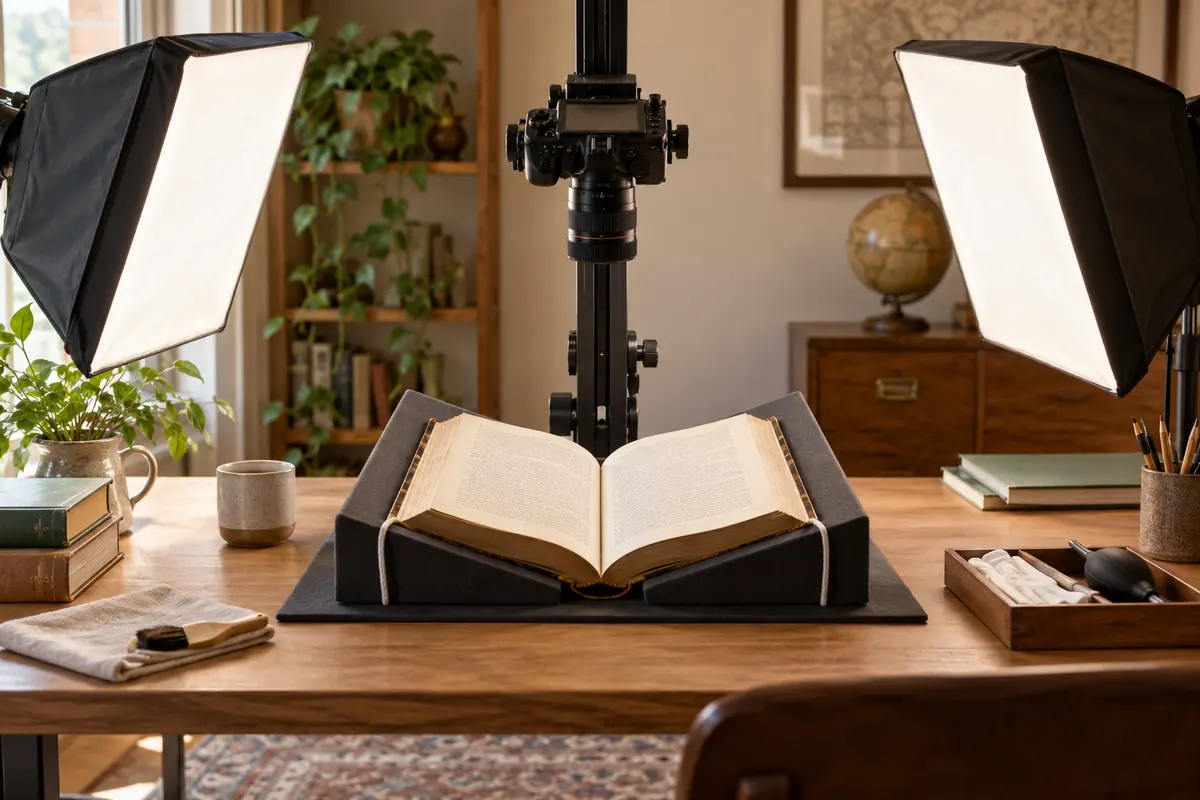
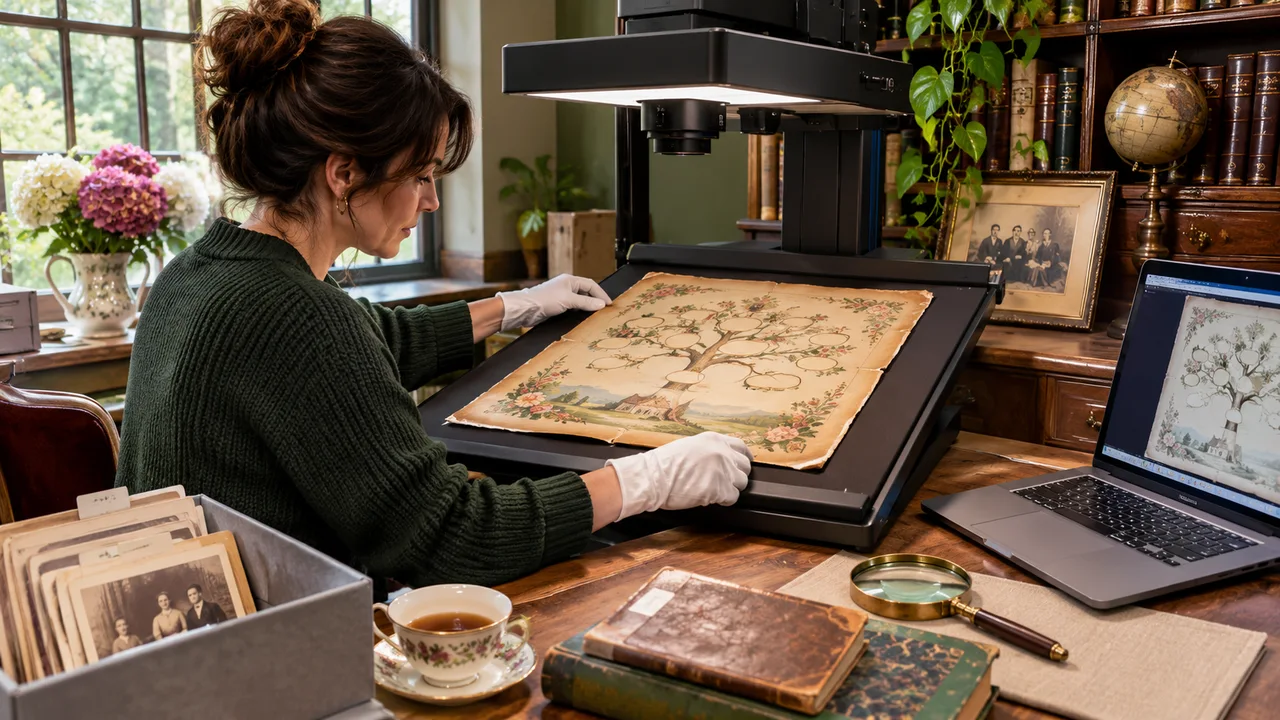
Digitisation setup with camera and book cradle. Illustration; fictional scene, not documentary evidence.
The method, step by step
Check repository rules and the object’s fragility. Capture front, back, margins and annotations without forcing bindings. Request suitable reproduction for fragile items.
Check sharpness, smallest writing, orientation and glare. Test a page before capturing the whole series and inspect images at actual size.
Name files with stable identifier, reference, page and side. Add an inventory with repository, capture date, source and sharing restrictions; filenames cannot hold the full citation.
Keep the initial capture and make a separate copy for rotation, contrast or cropping. Document changes; AI reconstruction must remain a separate interpretation, never evidence.
Choose a method based on the condition of the record
Use a flatbed scanner for a loose print only if it fits entirely on the glass without pressure from the lid. For a bound register, use a camera stand and support the volume without forcing it open. Keep fragile papers out of automatic feeders. Check sharpness, edges and the reverse before putting the original away; keep edited or compressed sharing copies separate. National Archives — Digitizing Family Papers and Photographs ↗
Tick items as you read. Ticks remain only on this page and disappear when it is reloaded.
Dates below apply to each resource, not an exhaustive check of its collections. Read the limits and official pages before requesting records or visiting.