Digitisation facilitates access but does not replace the original object. Preservation depends on materials, condition and storage.
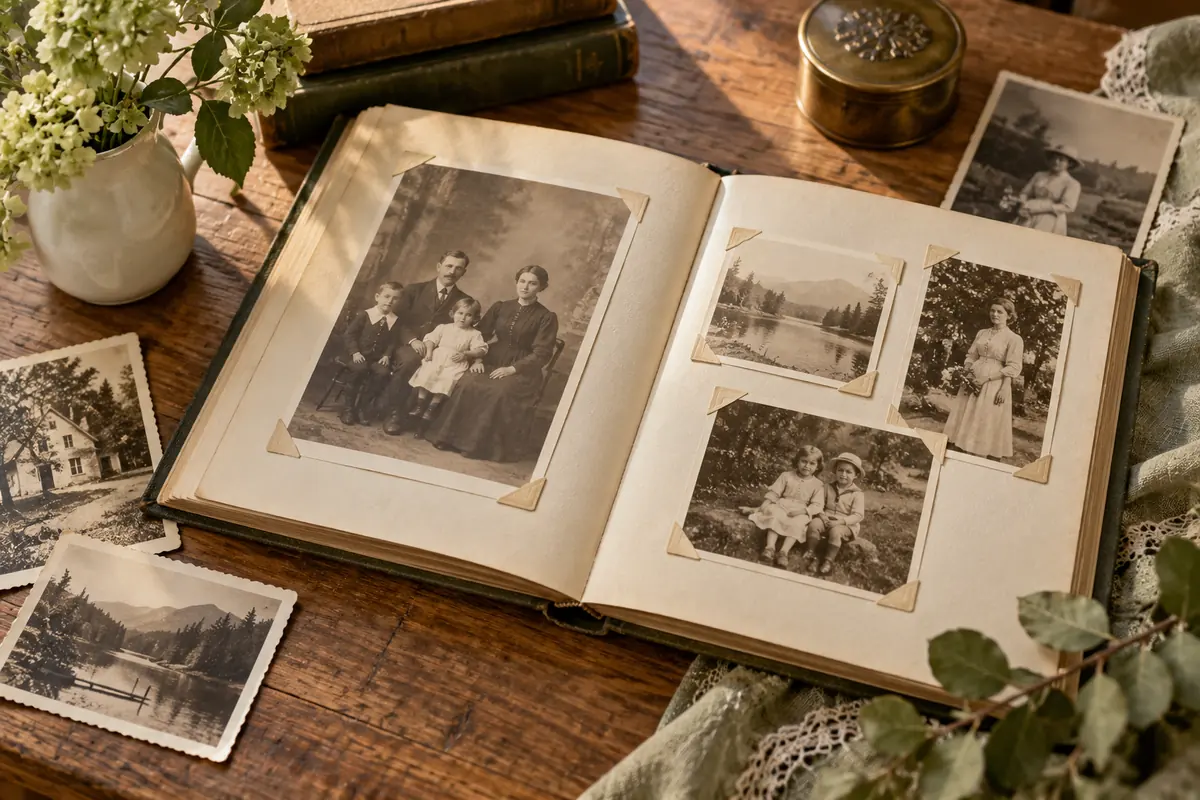
Photograph album with portraits of fictional people. Illustration; fictional scene, not documentary evidence.
The method, step by step
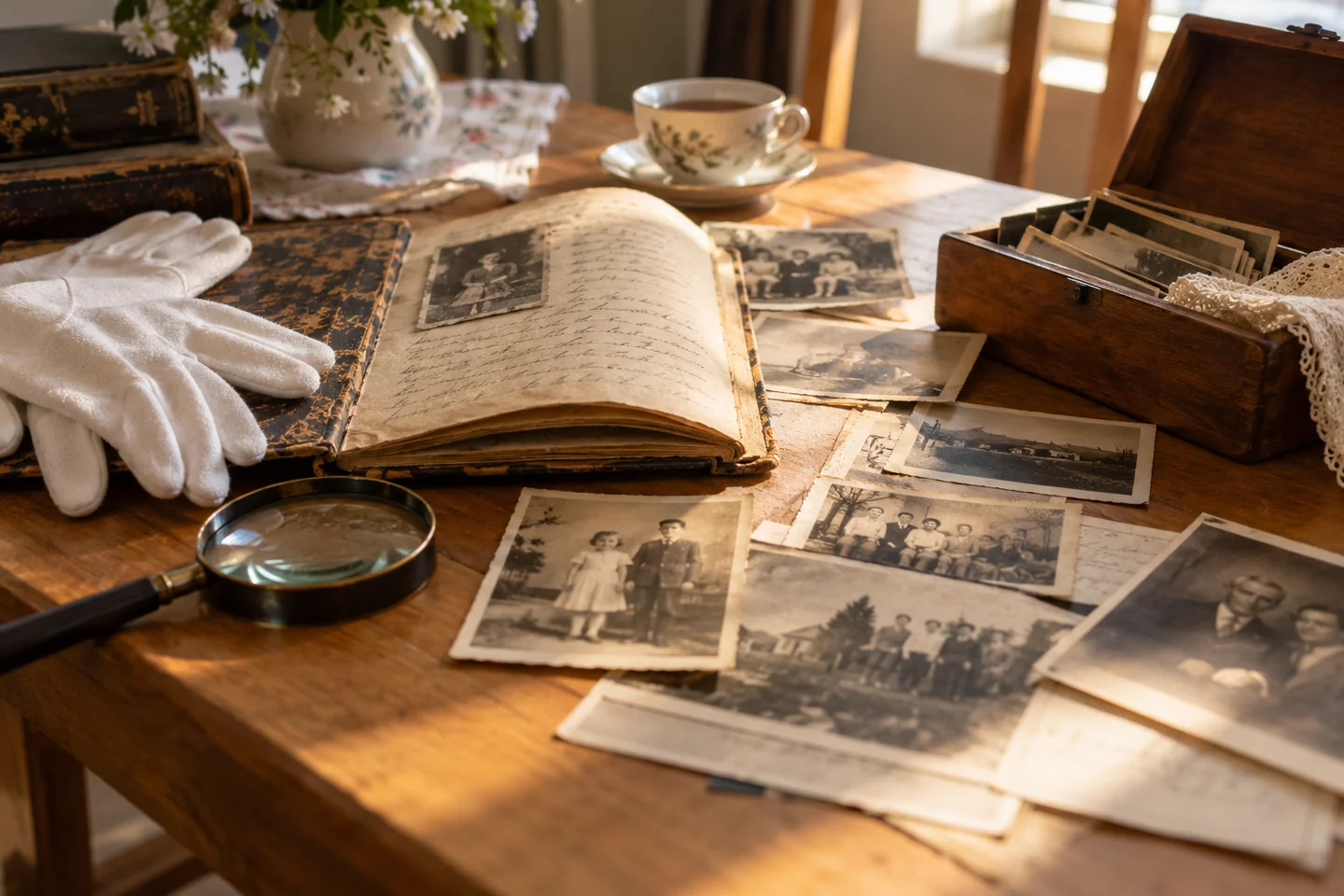
Inventory items before moving them. Identify fragile albums, glass, negatives and visible damage. Handle objects on a clean, dry surface away from food and drink.
Hold photographs by edges or housings. Avoid adhesives, paper clips and rubber bands; put identifiers on enclosures rather than images.
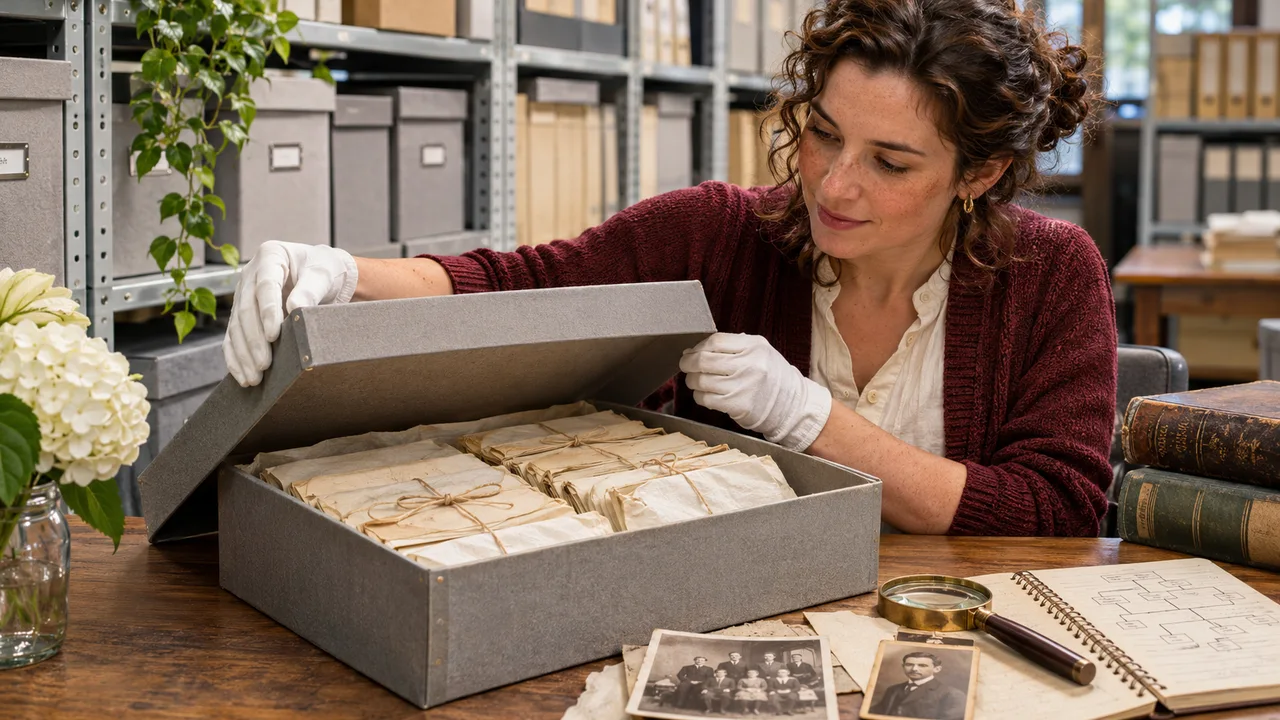
Choose stable storage protected from light and water leaks. Avoid places with major fluctuations such as some attics or basements; consult material-specific guidance.
Create a viewing copy to reduce handling. For mould, broken glass or detached photographic layers, stop handling and consult a conservation professional.
Albums: choose reversible mounting
What the collection contains
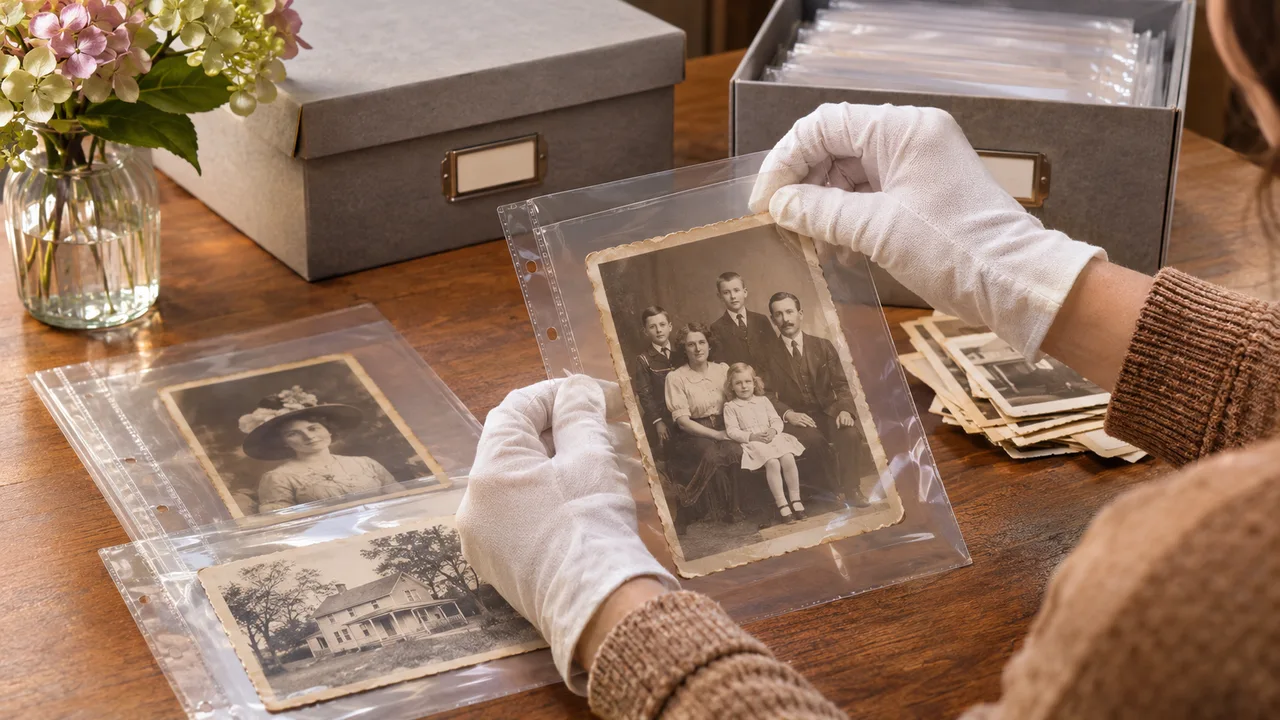
NARA recommends non-adhesive corners or sleeves using acid-free paper or stable plastics such as polyester, polypropylene and polyethylene. It advises against PVC and self-adhesive albums.
Details to record
Photograph page order and backs before changing storage. Record captions, neighbouring images and original envelope references.
Next check
Choose a support that holds the photograph without strain. If it is already glued or fragile, do not force removal: preserve its context and ask a conservator.
Dates below apply to each resource, not an exhaustive check of its collections. Read the limits and official pages before requesting records or visiting.