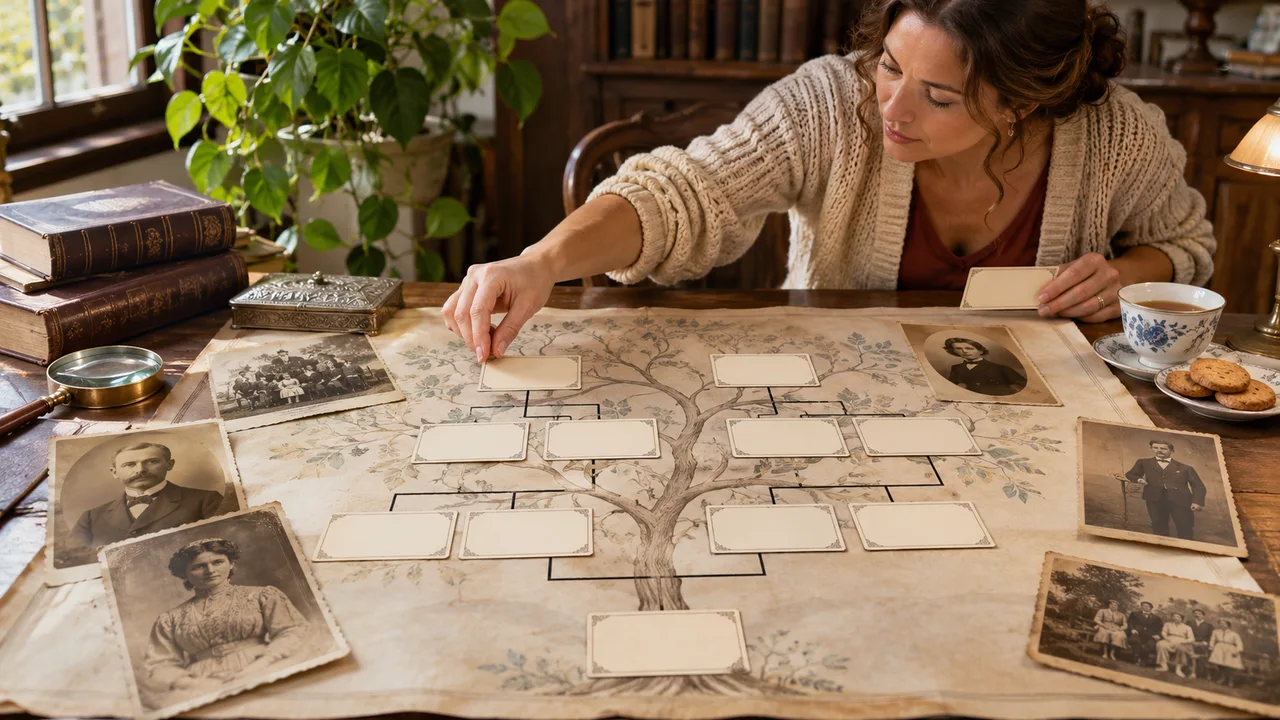
The comune is often the starting key. A region or common surname alone cannot identify a record.
Fictional map, compass and suitcase evoking a family journey. Illustration; fictional scene, not documentary evidence.
Prepare your research
Comune, province, Archivio di Stato, year and record type. Note whether you searched a name index, register index or the register itself.
The method, step by step
In Antenati locate the Archivio di Stato and locality registers. Choose record type and period, then browse indexes and images.
A register without a name index is still useful. Check tables and entry numbers; a volume may contain several parts.
For missing periods or records identify the comune, relevant archive or parish. Cross-check records from the emigration destination.
Choose the right repository
Antenati presents participating State Archives collections. If a period or municipality is missing also identify the comune and church archives.
Antenati: distinguish indexes, records and appendices
What the collection contains
The Canale Monterano catalogue distinguishes Matrimoni, Matrimoni, pubblicazioni and Matrimoni, allegati. These are different units: a ten-year index date is not necessarily the record date.
Details to record
Repository, fonds, municipality, exact series title, date span, entry number and image. Keep both the register link and the image reference.
Next check
After the index, open the record for the stated year. Then check for appendices in the fonds. Canale Monterano does not establish identical coverage for all Italian municipalities.
Name results lead to records. Without one, identify comune, year, register type and Archivio di Stato; browse volume images and indexes and check indexing coverage.
Compare birth, marriage and death through parents and places. Keep original spellings, record number and image identifier for rechecking.
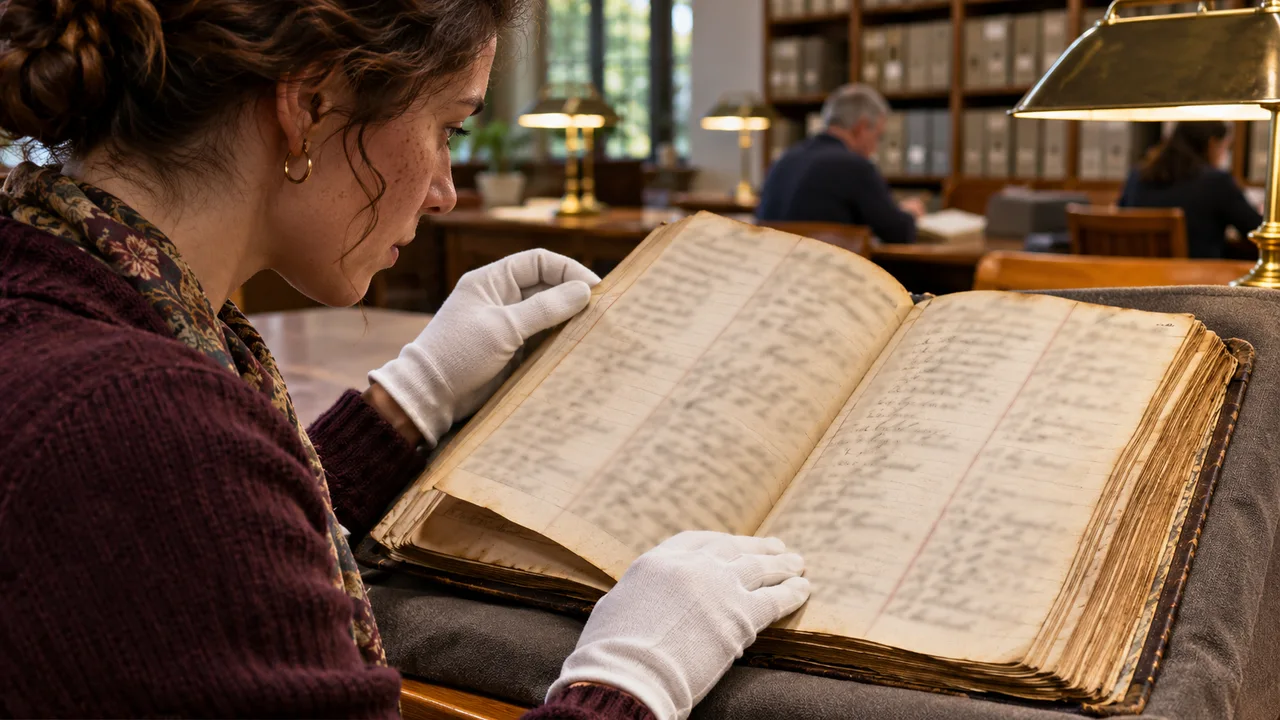
The Italian Ministry of Culture portal allows searching and browsing civil registers from participating archives. Identify the Archivio di Stato, comune, record type and year. If a name search fails, browse the register and its indexes.
Digitisation and indexing vary by archive and year. No name result does not mean no record.
Dates below apply to each resource, not an exhaustive check of its collections. Read the limits and official pages before requesting records or visiting.
Choose the right archive collection
Start from the event, date and administrative location at that time.
Scroll horizontally to read all columns.
Decision guide
Criterion
What to check
Practical implication
Responsibility
Identify which repository holds the record type and period.
The present municipality and the authority that created the record can differ.
Availability
Separate surviving holdings, searchable inventories and digitised documents.
No online image does not mean the record has disappeared.
People with the same name
Compare spouse, occupation, address, witnesses and chronology before linking records with the same name.
If several people remain possible, keep separate hypotheses and identify the record that could distinguish them.
Register gaps
Locate missing years, municipal changes and undigitised holdings before drawing a conclusion.
Failure to find an online record does not establish that the event never happened.
Archive reference
An archive reference identifies a unit held by an archive within a collection or series. It helps request or cite the record even when no digitised image is available. Source: Archives nationales — Méthodologie de recherche
Worked example
Fictional search: an index names a child, but the needed date is missing from the digitised series. The researcher checks the catalogue, finds an undigitised volume covering the period and records where to request it. Absence from the index does not erase the family lead.
How do I know whether a register covers the period I need?
Check parish or municipality, date span and gaps noted in the catalogue. An unsuccessful search in a digitised volume proves little if the relevant series is missing or held in another collection.