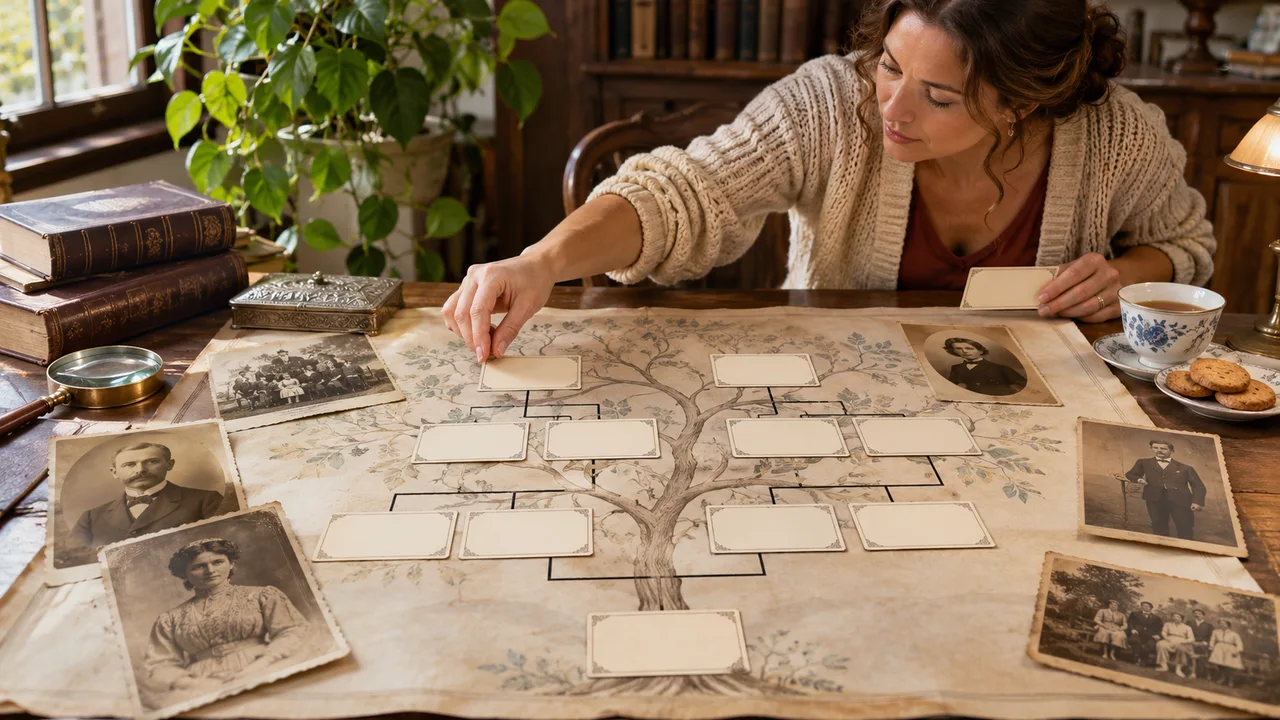
Marriage connects two families for comparison. Content varies by place, period and register type; never fill an absent fact by assumption.
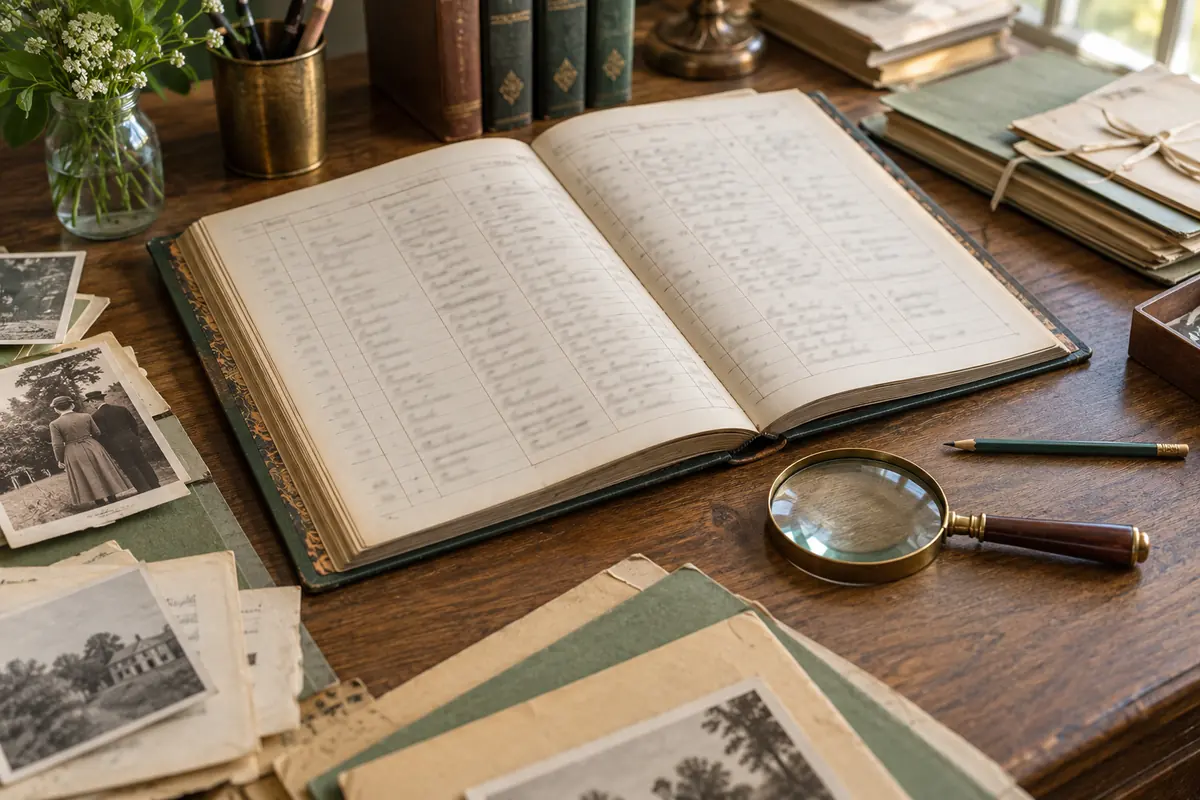
Register, folders and magnifying glass on a research desk. Illustration; fictional scene, not documentary evidence.
The method, step by step
Record ceremony date, registration date, entry number, reference and image separately. Banns, a contract and the ceremony are different records.
For each spouse transcribe stated name, age, occupation, address and marital status. Preserve exact place names and references to widowhood or an earlier marriage.
Record parents, their presence or reported death, then witnesses and explicitly stated relationships. A witness sharing a surname is not automatically a sibling.
Compare birth records and other known marriages. Log age or address differences in the timeline; search supporting papers only where catalogued.
Netherlands: locate the huwelijksbijlagen
What the collection contains
In South Holland, marriage appendices, or huwelijksbijlagen, form separate series. Survival varies by municipality and year; the Nationaal Archief provides a municipality table.
Details to record
Marriage municipality, year, entry number, archive number and inventory number. Do not confuse the register reference with the appendices reference.
Next check
First locate the marriage record in municipal or regional archives, then find appendices for that municipality and year. A catalogue entry does not guarantee online images.
IrishGenealogy separates civil and church records. General civil registration began in 1864; non-Roman Catholic marriages were recorded from 1845. These historical starting points do not guarantee an image for every event.
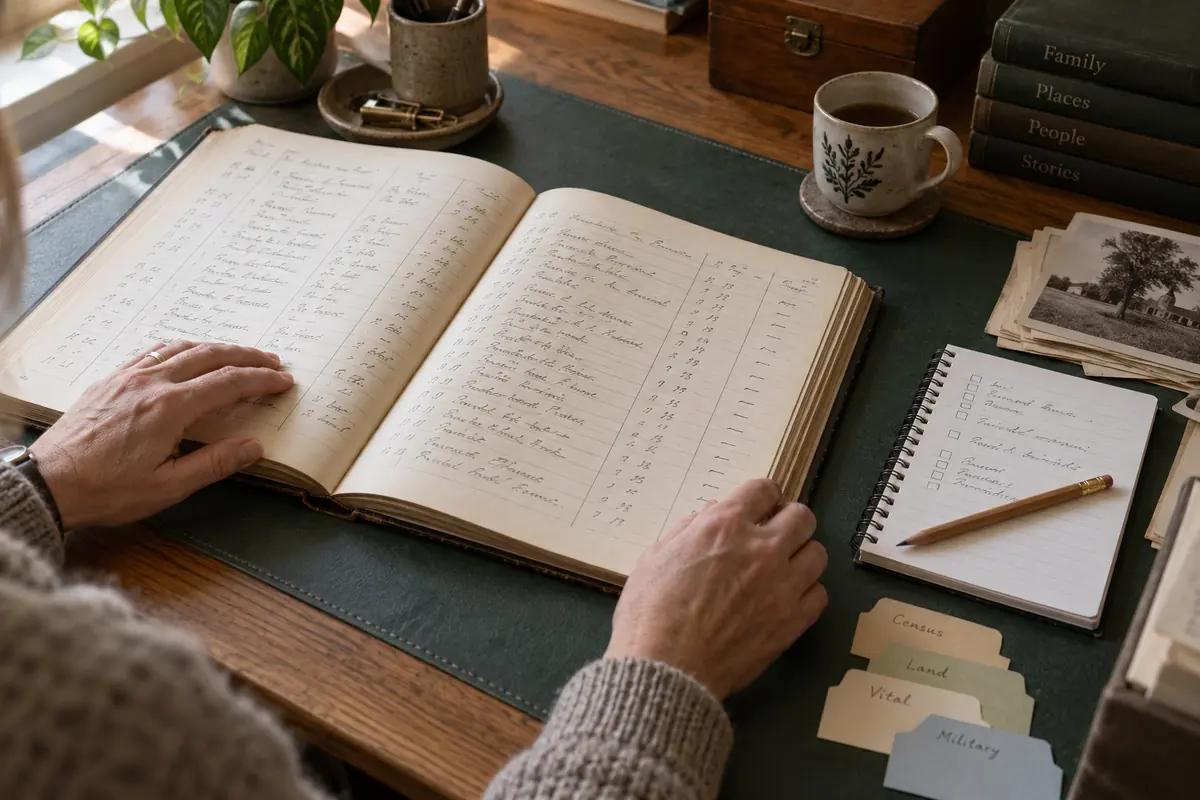
Tick items as you read. Ticks remain only on this page and disappear when it is reloaded.
For a French marriage, a full copy reproduces register information and any marginal entries. An extract with parentage summarises the parents; one without parentage omits their names. Identify the format before concluding that a parent, occupation or address is undocumented.
Separate spouses, parents, witnesses and informants, and the different dates. A witness with the same surname is not automatically a relative. Link each research lead to its passage in the record and check issuance conditions with the relevant authority.
Try the reasoning
Two spouses have common names. What makes their record distinctive?
Reasoning: Compare parents, witnesses, occupations and addresses with other records. A witness’s matching surname does not prove kinship.
Dates below apply to each resource, not an exhaustive check of its collections. Read the limits and official pages before requesting records or visiting.