Establishing relationships
Document an unsuccessful search
Finding nothing is useful when the search scope is known. It prevents repetition and supports choosing another source without prematurely denying an event.
Read the guide ↗ ROOT & GENEALOGYThe connections that span generations

A shared name does not prove a relationship. Build a timeline, compare clues and make conclusions traceable by citing the records you used.
Finding nothing is useful when the search scope is known. It prevents repetition and supports choosing another source without prematurely denying an event.
Read the guide ↗Your result is a reviewable conclusion with evidence, conflicts and open questions. Leave uncertain relationships unresolved and identify the record that could confirm or reject them.
Matching first and last names are not enough to attach a record to an ancestor. Treat each candidate separately until several clues agree.
Read the guide ↗
A useful citation lets another researcher locate the same record. It is also needed for negative findings or uncertain readings.
Read the guide ↗
A stalled search often involves scope, coverage or identity. Return to proven facts before searching every website.
Read the guide ↗
A timeline brings events and evidence together without hiding conflicts. It helps distinguish people and identify the next record to seek. Keep one row per statement, even for conflicting dates of one event.
Read the guide ↗
Name variations and household-head descriptions can obscure a woman’s life. Reconstruct it from several sources, preserving each name form in context.
Read the guide ↗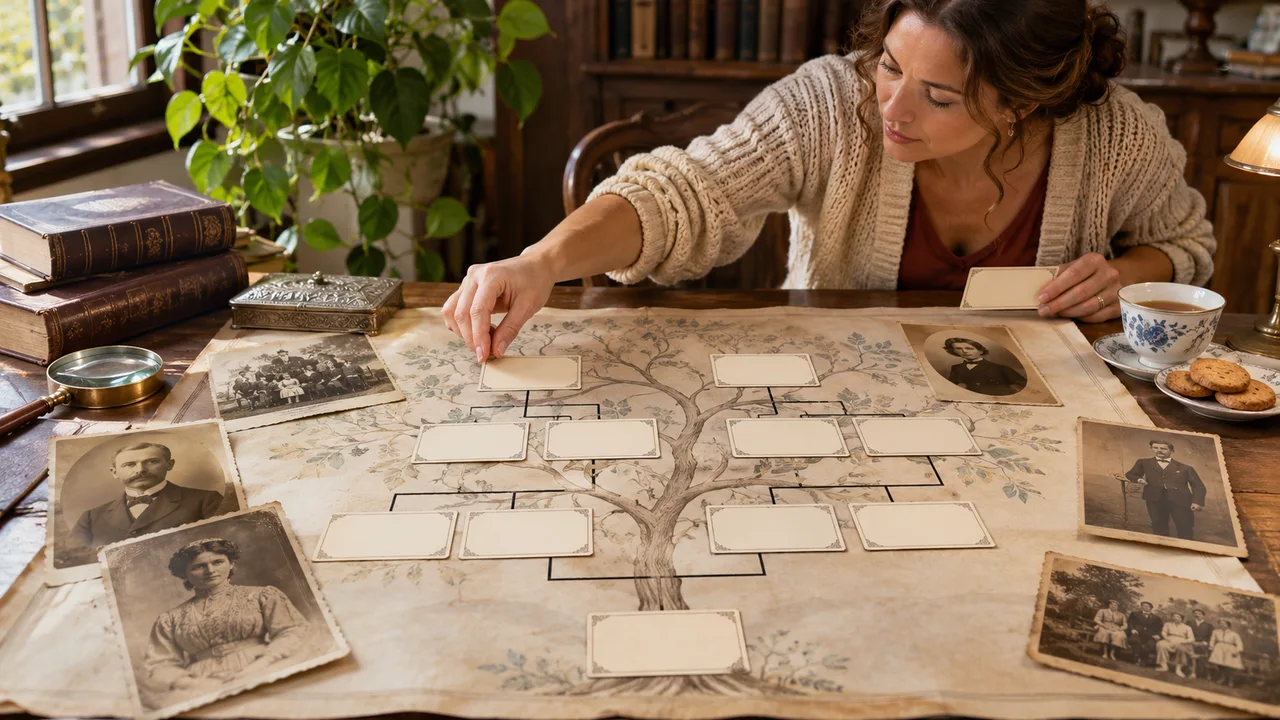
A person’s network helps distinguish namesakes and interpret moves. It gains evidential value when independent records connect the same people.
Read the guide ↗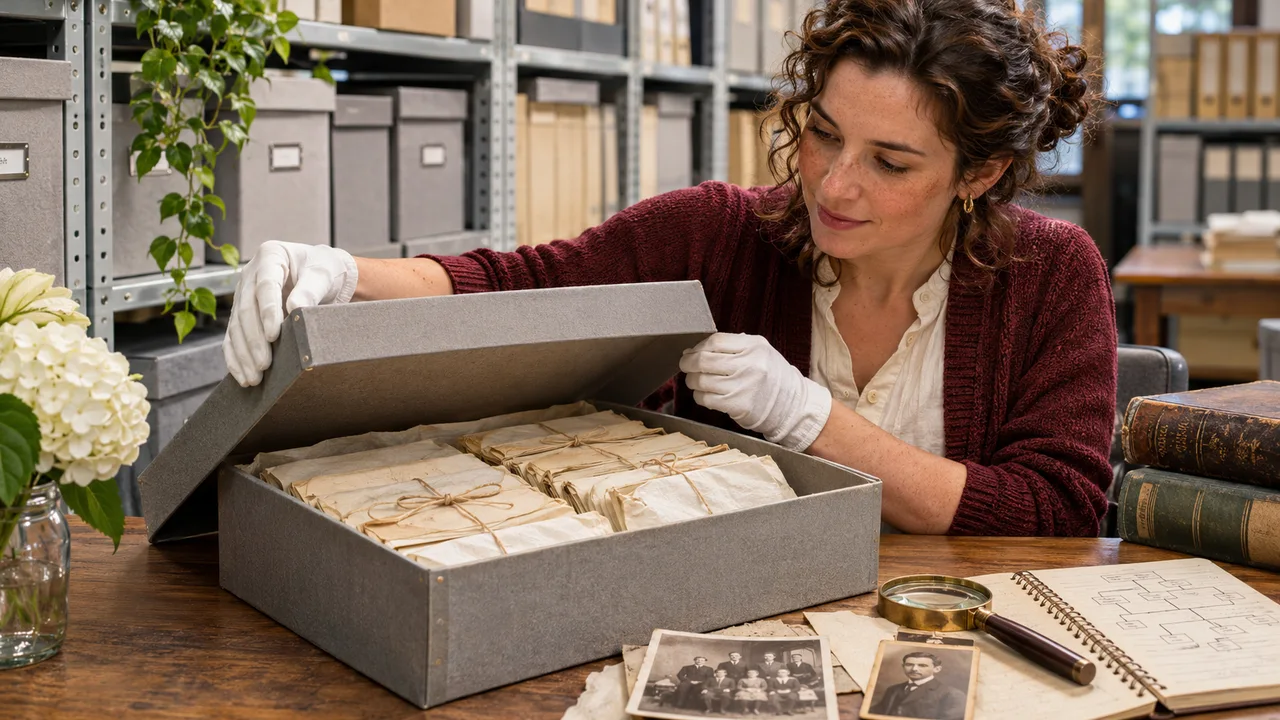
Preserve a date as written before normalising it. Calendar, language and year conventions may explain differences between documents.
Read the guide ↗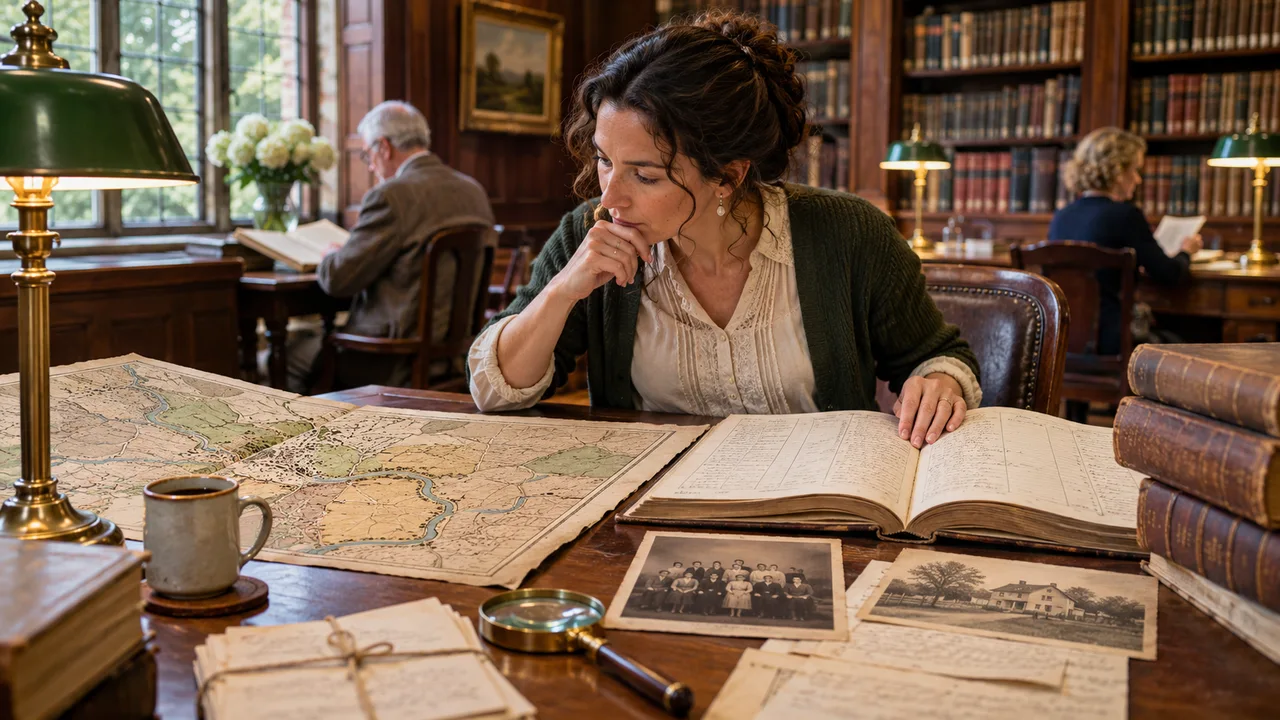
Choosing the repository comes before name searching. State Archives guidance identifies central administrative traces and distinguishes public career, parish records and residence. These needs do not necessarily lead to the same holder.
Read the guide ↗Start with your research question. Compare what each record can contribute before expanding your search.
| Starting point | Record or action to prioritise | What still needs checking |
|---|---|---|
| Two people with the same name | Compare spouse, occupation, address and witnesses. | Look for evidence against the proposed match too. |
| Two matching family trees | Trace each tree back to its cited records. | Two copies of one tree are not independent evidence. |
| No result | Check coverage, gaps, variants and indexing method. | An unsuccessful search does not prove an event never happened. |
Method pointers: surviving collections and recorded information vary by place and period.
Keep the original wording and source too. “March 1842” must not become 1 March; a Republican or Julian date must not be treated as Gregorian without documented conversion.
Explain the date →