Name variations and household-head descriptions can obscure a woman’s life. Reconstruct it from several sources, preserving each name form in context.
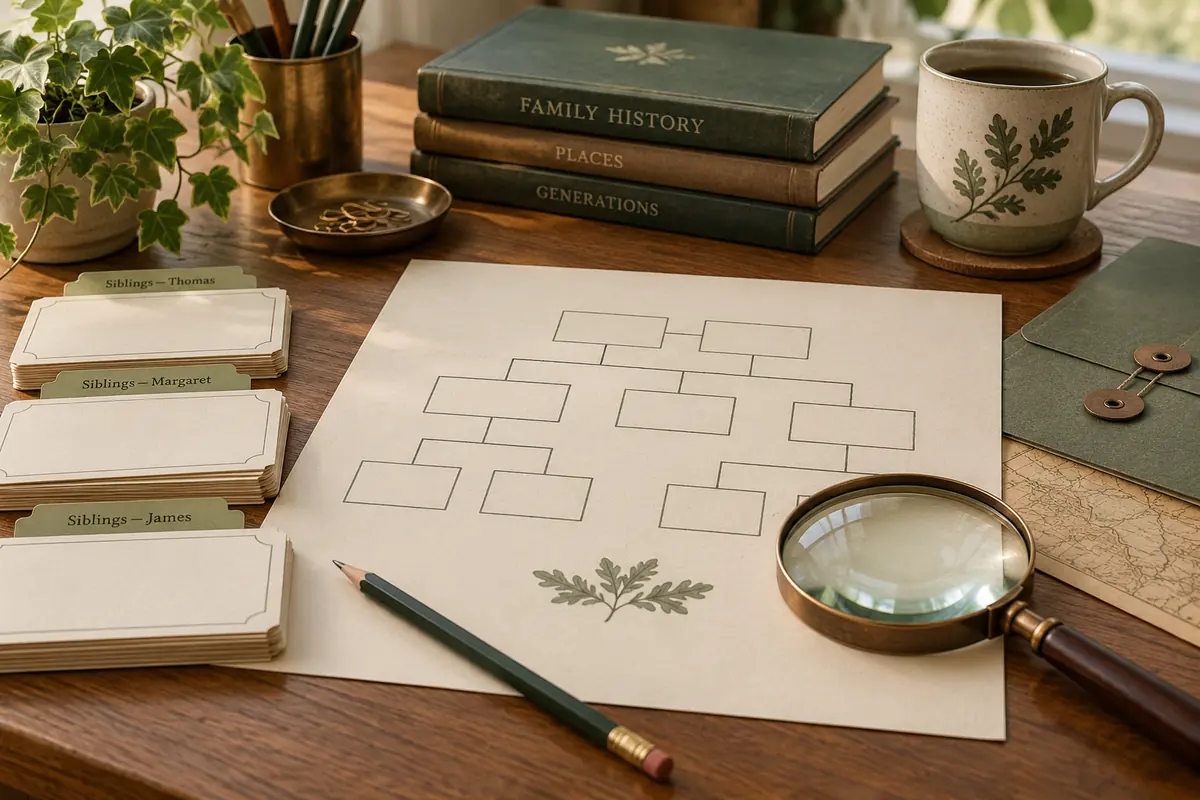
Cards and keepsakes arranged to evoke a research timeline. Illustration; fictional scene, not documentary evidence.
The method, step by step
Start with a record identifying the woman and parents or spouse. Record birth name and other documented names without assuming marital naming customs are universal.
Search recorded names and the records of children, siblings and witnesses. Order results by date to distinguish successive marriages and namesakes.
Explore catalogued local property, work, correspondence and association records. An occupation omitted from a record does not prove absence of work.
Write her own timeline with places, documented actions and uncertainties. Cite records linking names before merging two profiles.
If the search stalls
Does the name change between records? Search birth name, spouse’s name and variants. Compare parents, residence and witnesses instead of assuming one naming rule across periods.
The official probate search service covers England and Wales for deaths after 1857. It locates grants of representation and a will where one is included. Scotland and Northern Ireland have separate research routes.
Tick items as you read. Ticks remain only on this page and disappear when it is reloaded.
Dates below apply to each resource, not an exhaustive check of its collections. Read the limits and official pages before requesting records or visiting.