A passenger list documents a recorded journey. It becomes useful when connected to established places and relatives.
Fictional map, compass and suitcase evoking a family journey. Illustration; fictional scene, not documentary evidence.
The method, step by step
Define a departure or arrival range using the last origin record and first destination record. Note possible ports.
Search name variants, ship and companions. Check port and period coverage without restricting the search to the best-known port.
Read both pages if the form continues. Record contacts, destination, last residence and birthplace only where present.
Compare age, occupation and relatives with civil, census and naturalisation records. Separate departure, arrival and administrative dates.
Spain: research emigration in Movimientos Migratorios
The portal brings together selected records from Spanish and Ibero-American archives, including lists from the Spanish consulate in Veracruz. Before interpreting an absence, check whether the listed collections cover the port, period and record type. Ministerio de Cultura — Movimientos Migratorios ↗
Try the name alone, then add a place or the ship’s name if documented. Record the repository and reference and compare the catalogue entry with the image when available. If the collection excludes the arrival, check archives in the destination country too. Ministerio de Cultura — Buscador de Movimientos Migratorios ↗
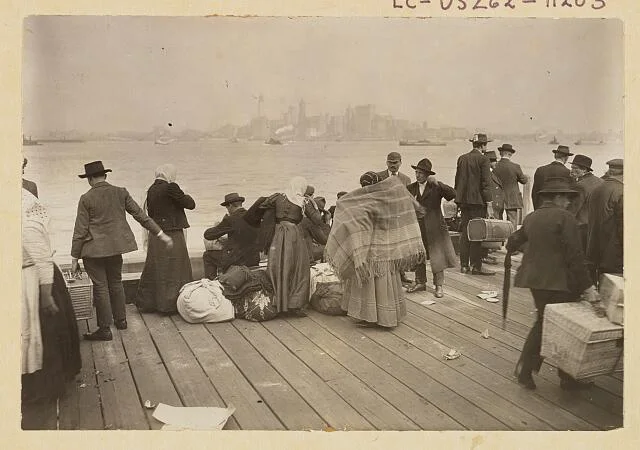
Ellis Island, 30 October 1912: immigrants waiting for transfer. This photograph documents a group scene; it cannot establish each person’s name or ship. For an individual search, compare a passenger list with the date, port and other identifying details.
Observe
Read the catalogue record
Cross-check sources
Conclude carefully
If the search stalls
The name is on the list, but is it the right person? Compare age, last residence, destination contact and companions. Find a record after arrival before attaching this passage to your ancestor.
A declaration of intention, a petition and a certificate are different records. To connect a family to a US file, identify the proceedings and court, then compare personal information with established records.
A manifest describes a recorded journey, not an entire migration. Establish arrival port, ship and date, then read the complete entry, cross-references and other pages before connecting the passenger to your family.
The relevant repository depends on arrival date and port. The National Archives of Australia holds federal series and some earlier records; state and territory archives are essential for other early arrivals. RecordSearch does not cover everything that ever existed.
Tick items as you read. Ticks remain only on this page and disappear when it is reloaded.
Dates below apply to each resource, not an exhaustive check of its collections. Read the limits and official pages before requesting records or visiting.