
The UK National Archives guides cover censuses, migration, military records and repositories. Start with the topic guide, then the Discovery catalogue: a description identifies a record but does not guarantee free online access.




Coverage and access
- Resource type
- Catalogue and guidance
- Filter by territory
- United Kingdom
- External link review
- — Automated review limited: confirm on the official website
Collections to search
Topic guides and Discovery catalogue; check the holder.
A workflow for this portal
Choose a precise subject, such as military service or migration. Read its guide and search for the series in Discovery. Distinguish TNA holdings from descriptions of another repository.
Access and copies
A description may lead to a reading room or an order. Check item access and copying conditions before travelling.
Institutional reference page
The National Archives ↗The review covers the guidance page, not every image or ordering service.
England and Wales: choose the right census
Named census returns from 1841 to 1921 are available online, with access conditions varying by service. The 1931 England and Wales census was destroyed by fire in 1942; no census was taken in 1941. The National Archives — Census records ↗
The register of 29 September 1939 records the civilian population of England and Wales; it is not a census. It may bridge research between the 1921 and 1951 censuses, but does not cover Scotland or Northern Ireland. Record name, birth date, address, occupation and page reference before matching a person. The National Archives — 1939 Register ↗
Explore this research in depth

England and Wales: find a will after 1857 →
The official probate search service covers England and Wales for deaths after 1857. It locates grants of representation and a will where one is included. Scotland and Northern Ireland have separate research routes.
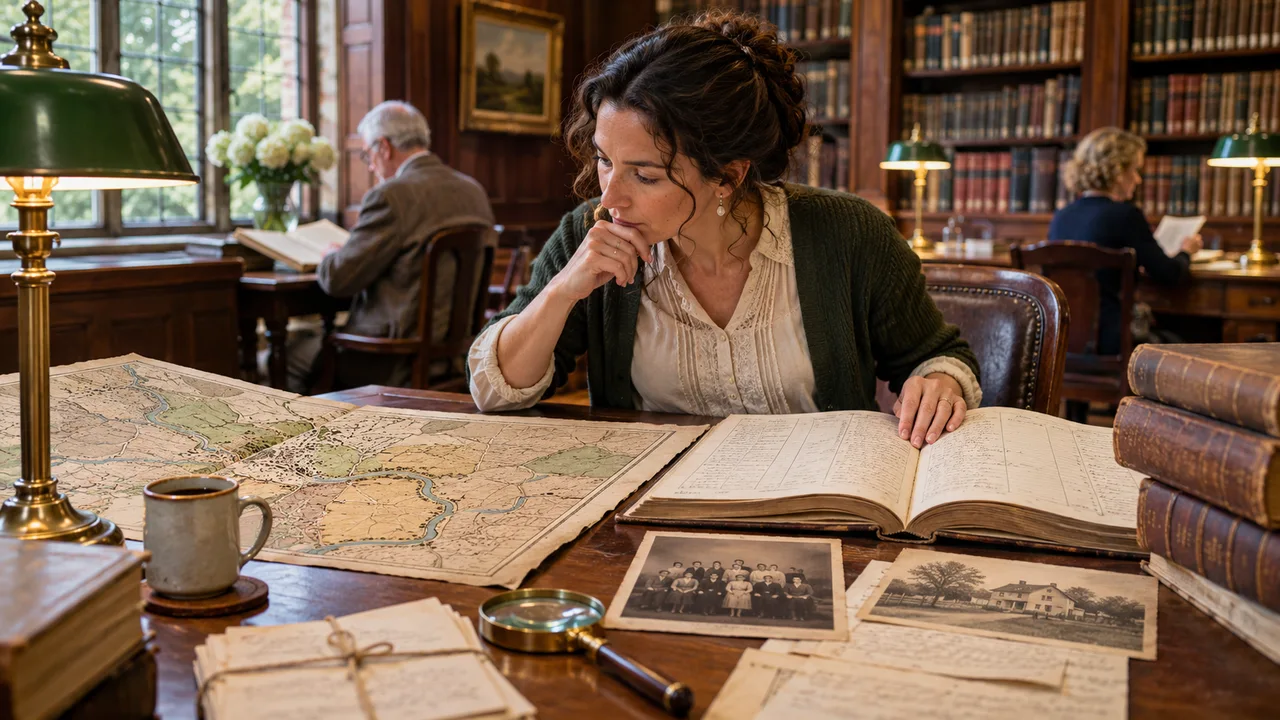
British soldiers of 1914–1918: connect the record series →
An individual service file, medal card and unit diary illuminate different aspects of military service. This National Archives guide covers British Army other ranks and non-commissioned officers; commissioned officers and Commonwealth armies require different searches.
Sources & references
- The National Archives ↗ (Resource review date : )
- The National Archives — Census records ↗ (Resource review date : )
- The National Archives — 1939 Register ↗ (Resource review date : )
- HM Courts & Tribunals Service — Search probate records ↗ (Resource review date : )
- The National Archives — British Army soldiers of the First World War ↗ (Resource review date : )
- The National Archives — British military campaign and service medals ↗ (Resource review date : )