The connections that span generations

Provincial archives for locating households in the 1921, 1935 and 1945 named censuses and tracing events in parish registers.
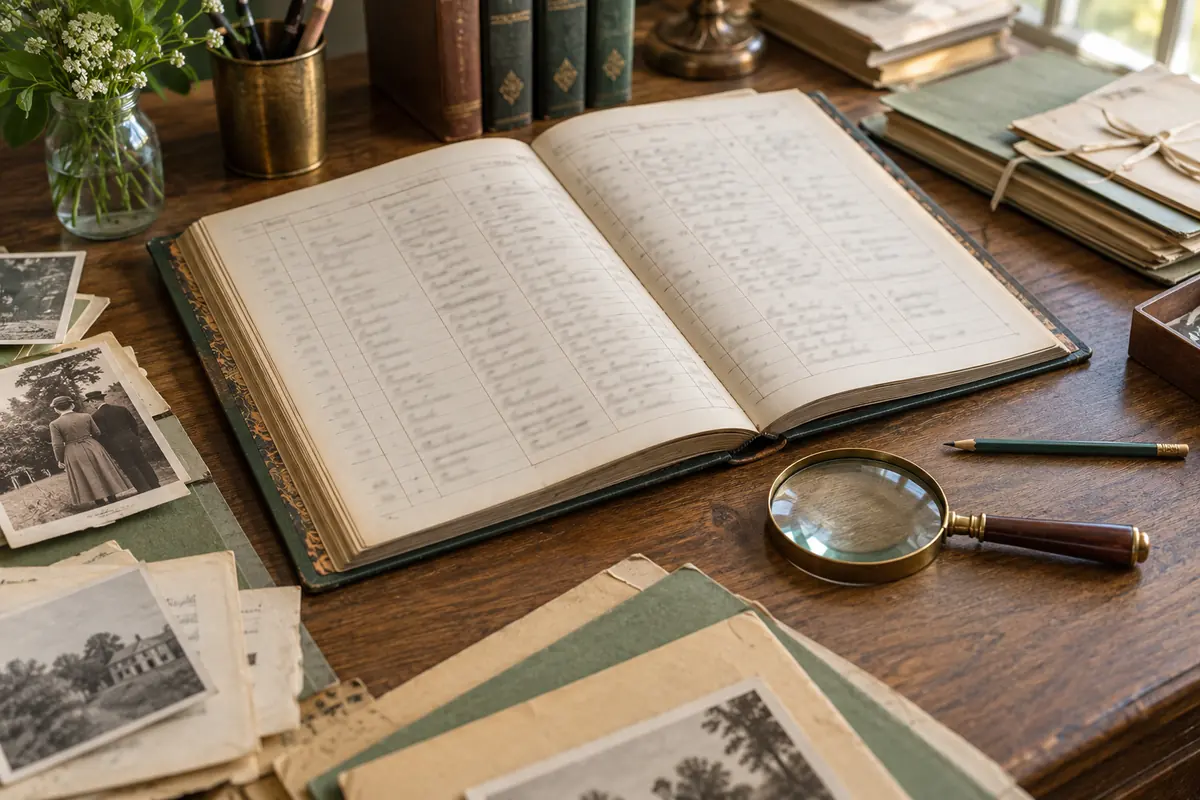
Register, folders and magnifying glass on a research desk. Illustration; fictional scene, not documentary evidence.
Visit the official resource ↗

Coverage and access

Resource type
Catalogue and guidance
Filter by territory
Canada
External link review
— Official page consulted

Collections to search

Newfoundland named censuses, parish registers, some civil registers on microfilm and newspaper extracts.

A workflow for this portal

Start with the locality, its historical spelling and a year. For a census, look up district, section, page and reel. For parish registers, also identify the denomination.

Access and copies

Use The Rooms’ finding aids and remote research guidance. Library and Archives Canada also lists census localities and reel numbers.

Institutional reference page

The Rooms — Provincial Archives of Newfoundland and Labrador ↗

The review covers the guidance page, not every image or ordering service.

Newfoundland: find the right census reel

The 1921 and 1931 Dominion of Canada censuses do not cover Newfoundland, which became a Canadian province in 1949. For a Newfoundland household, check the 1921, 1935 and 1945 series held by the provincial archives. Library and Archives Canada — Dominion of Canada, 1871 to 1931 ↗

Library and Archives Canada links each place and year to a district, section, pages and reel. For example, Abrahams Cove is listed under St. George’s-Port au Port in 1921 (M-8044, pp. 198–199) and St. George’s in 1935 (M-8050, pp. 249–250). Record each year’s reference before comparing households. Library and Archives Canada — Newfoundland and Labrador census and enumerations ↗

Sources & references

Dates below apply to each resource, not an exhaustive check of its collections. Read the limits and official pages before requesting records or visiting.

Choose the right archive collection

Start from the event, date and administrative location at that time.

Scroll horizontally to read all columns.

Decision guide
CriterionWhat to checkPractical implication
ResponsibilityIdentify which repository holds the record type and period.The present municipality and the authority that created the record can differ.
AvailabilitySeparate surviving holdings, searchable inventories and digitised documents.No online image does not mean the record has disappeared.
People with the same nameCompare spouse, occupation, address, witnesses and chronology before linking records with the same name.If several people remain possible, keep separate hypotheses and identify the record that could distinguish them.
Register gapsLocate missing years, municipal changes and undigitised holdings before drawing a conclusion.Failure to find an online record does not establish that the event never happened.
Archive reference
An archive reference identifies a unit held by an archive within a collection or series. It helps request or cite the record even when no digitised image is available. Source: Archives nationales — Méthodologie de recherche
Worked example

Fictional search: an index names a child, but the needed date is missing from the digitised series. The researcher checks the catalogue, finds an undigitised volume covering the period and records where to request it. Absence from the index does not erase the family lead.

Confirm before deciding

How do I know whether a register covers the period I need?

Check parish or municipality, date span and gaps noted in the catalogue. An unsuccessful search in a digitised volume proves little if the relevant series is missing or held in another collection.

In France, departmental and some municipal archives provide access to many civil registers. Archives nationales — Localiser les documents Source consulted on .