A passenger manifest records a journey; an immigration file may explain what happened afterwards. Learn to distinguish an AR-2 registration form from an individual A-File and decide whether to search the National Archives (NARA) or USCIS.
The method, step by step
Build a search sheet with documented names and variants, date and place of birth, addresses and any A-Number found on a record. Note where each detail came from: two people with the same name may live in the same city.
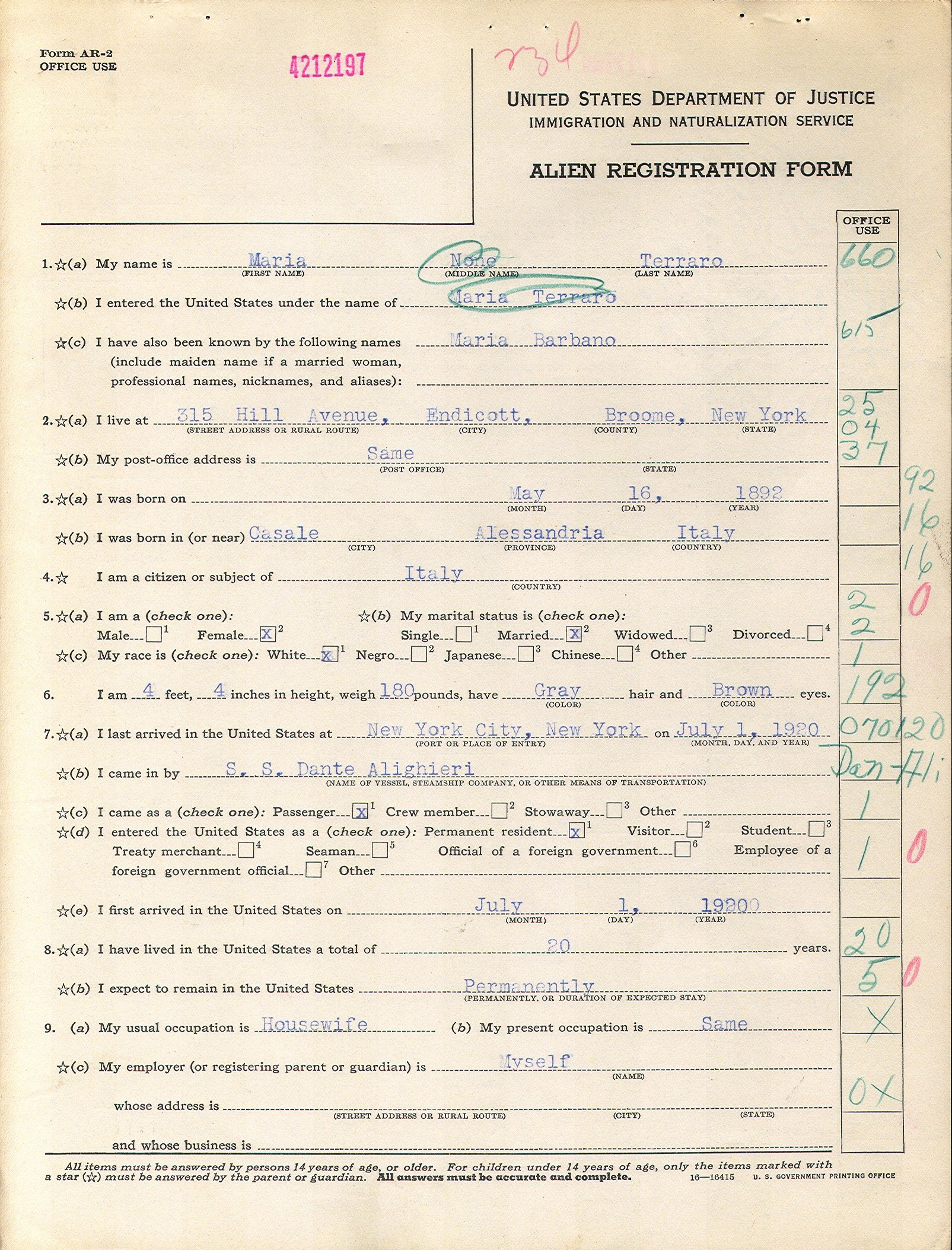
Registration numbers began to be assigned in 1940; immigration officials began creating A-Files under those numbers in April 1944. An AR-2 may survive even when no A-File is found. Check the two series separately and look for cross-references in documents you already have.
Start with the NARA holdings. A-Files become eligible for transfer 100 years after the year of birth, but transfer then and online access are not guaranteed. If you cannot locate the file, check the record series covered by the USCIS Genealogy Program: an index search finds identifiers and is separate from ordering copies.
When you obtain a record, cite the repository, series, file identifier and document or page consulted. Compare birth details, address and relatives with an independent source; distinguish when the record was created, filed and decided.
On the front, record the A-number, the name used on arrival and the reported arrival date separately. The reverse shown in the NARA presentation bears the 1940 registration stamp. Record the voyage and registration dates separately, then search for the passenger manifest under the name used on arrival.
Observe
Read the catalogue record
Cross-check sources
Conclude carefully
Tick items as you read. Ticks remain only on this page and disappear when it is reloaded.
Dates below apply to each resource, not an exhaustive check of its collections. Read the limits and official pages before requesting records or visiting.