The connections that span generations
ROOT & GENEALOGY

Preparing a family tree for sharing

ROOT & GENEALOGY · Content updated on · Editorial method and sources

A sharing copy needs its own review. Choose audience, included people and genuinely needed documents.

Computer, backup drive and album in a research workspace. Illustration; fictional scene, not documentary evidence.

The method, step by step

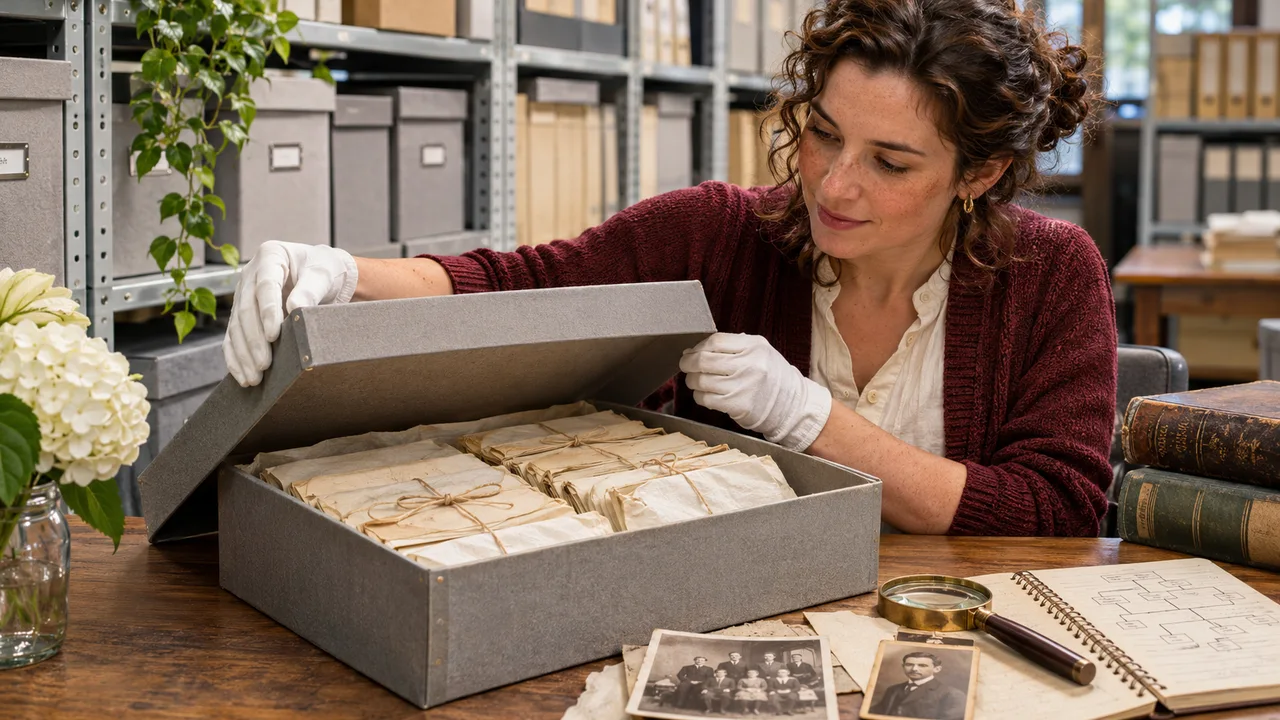
  1. A person opens an archival box containing family correspondence.
    Keep a complete private backup. Work on a copy to remove living people’s information, addresses, sensitive notes and non-public documents.
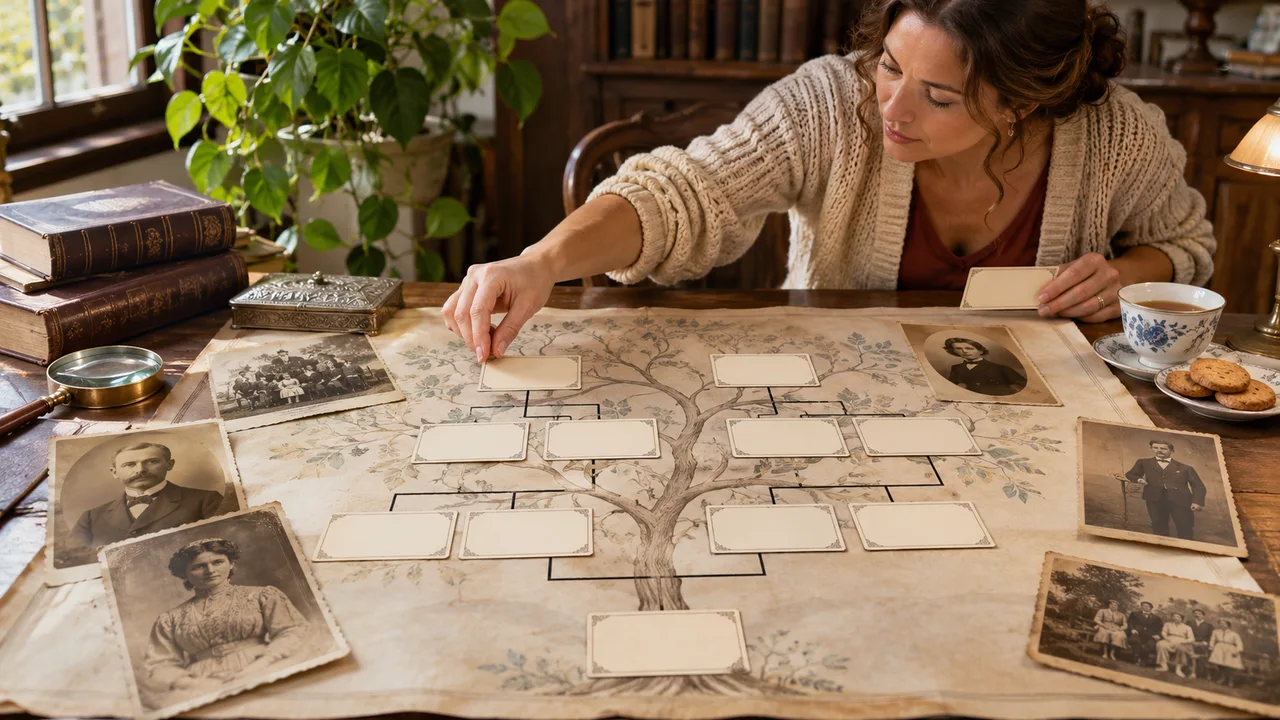
  2. A person arranges blank family-tree cards and old-style portraits.
    Check export settings and linked media. A GEDCOM may include notes and references; attachments can reveal more than the displayed tree.
  3. Library and reading space.
    Review sources, uncertainty and reproduction rights. Ask a living person’s permission before sharing their information.
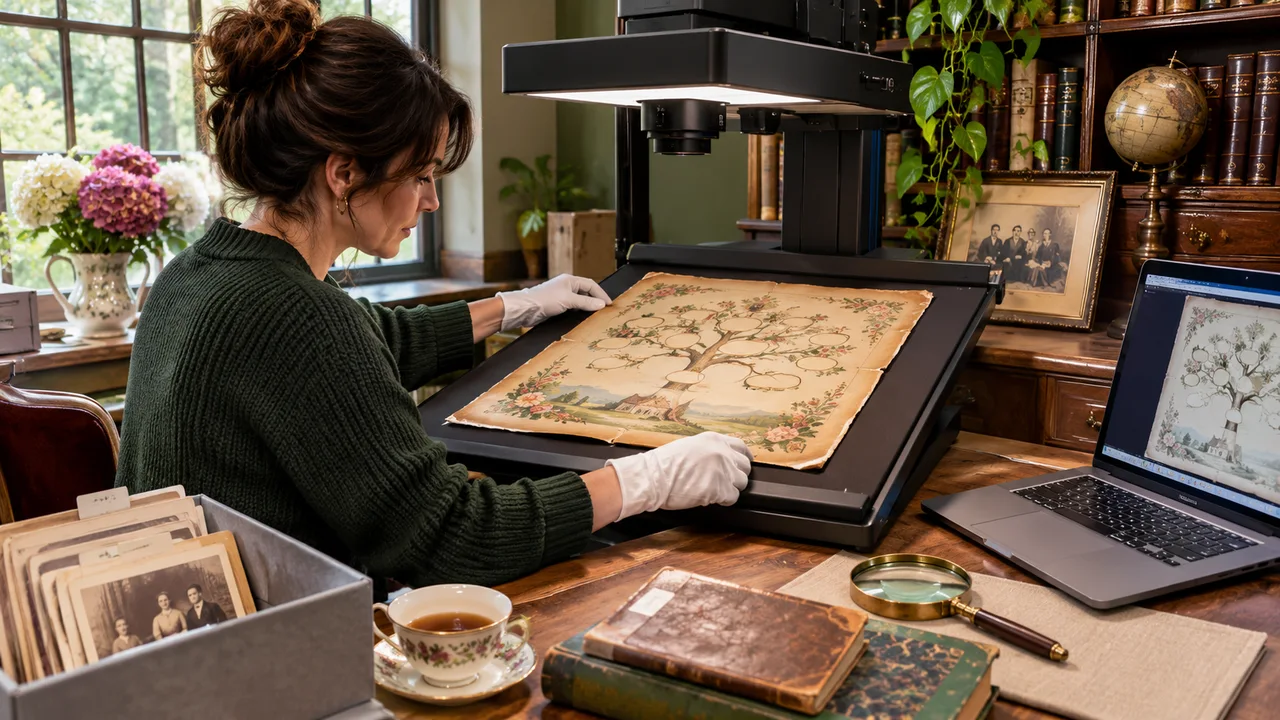
  4. An overhead scanner is positioned above an illustrated family document.
    Open the export in a separate environment and inspect it. Add version date, correction contact and citations; retain your private recipient list.

Tick items as you read. Ticks remain only on this page and disappear when it is reloaded.

Record in your research log

  • Private version
  • sharing copy
  • removed people
  • media
  • checked export.
Document an unsuccessful search →

Frequently asked questions

Is hiding living people enough before export?

Check the exported file, notes and linked media. Display settings may not apply to exports. Work on a copy and retain a private backup.

A useful next action

Organising your research →

Sources & references

Dates below apply to each resource, not an exhaustive check of its collections. Read the limits and official pages before requesting records or visiting.